V01 / Illustrative framework
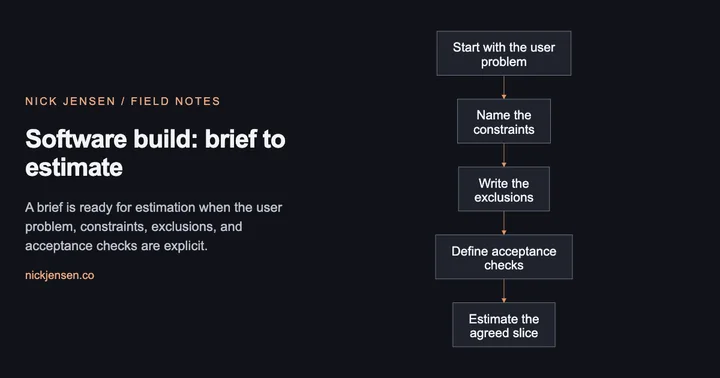
Software build: brief to estimate
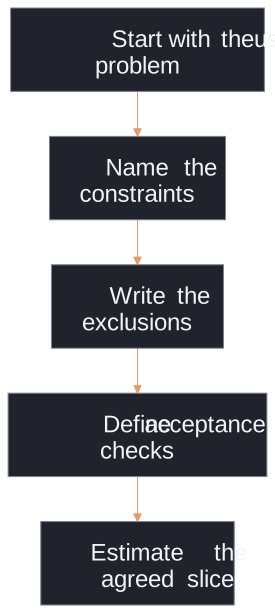
A brief is ready for estimation when the user problem, constraints, exclusions, and acceptance checks are explicit.
The visual library
Original diagrams for the decisions behind software: scope, architecture, delivery, data, and the people who keep it working. Each graphic links to the explanation, assumptions, and practical example behind it.
52 graphics · SVG originals · PNG downloads
V01 / Illustrative framework
A brief is ready for estimation when the user problem, constraints, exclusions, and acceptance checks are explicit.
V02 / Illustrative framework
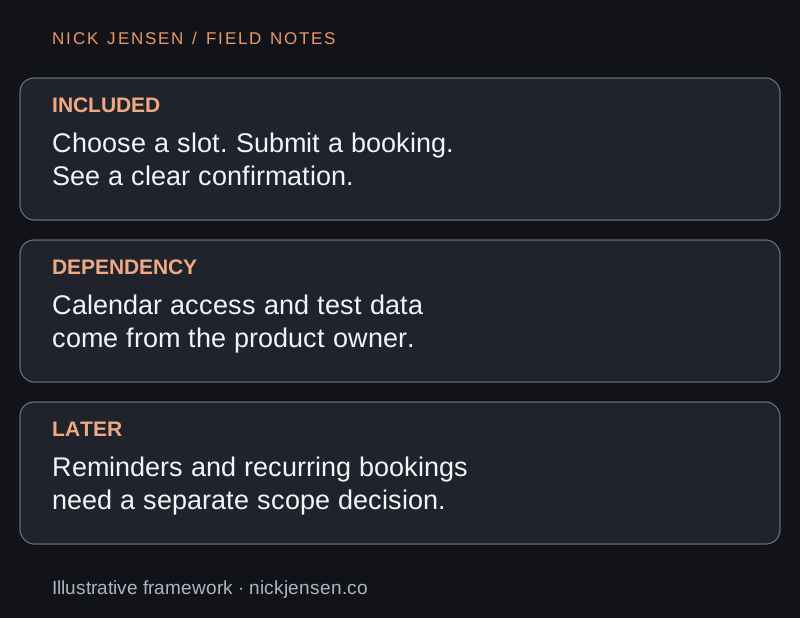
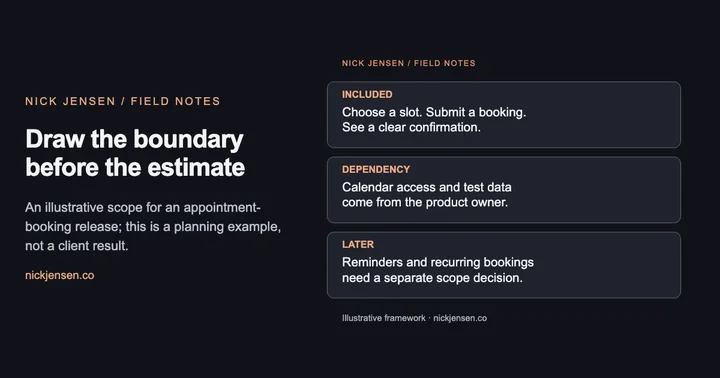
An illustrative scope for an appointment-booking release; this is a planning example, not a client result.
V03 / Illustrative framework
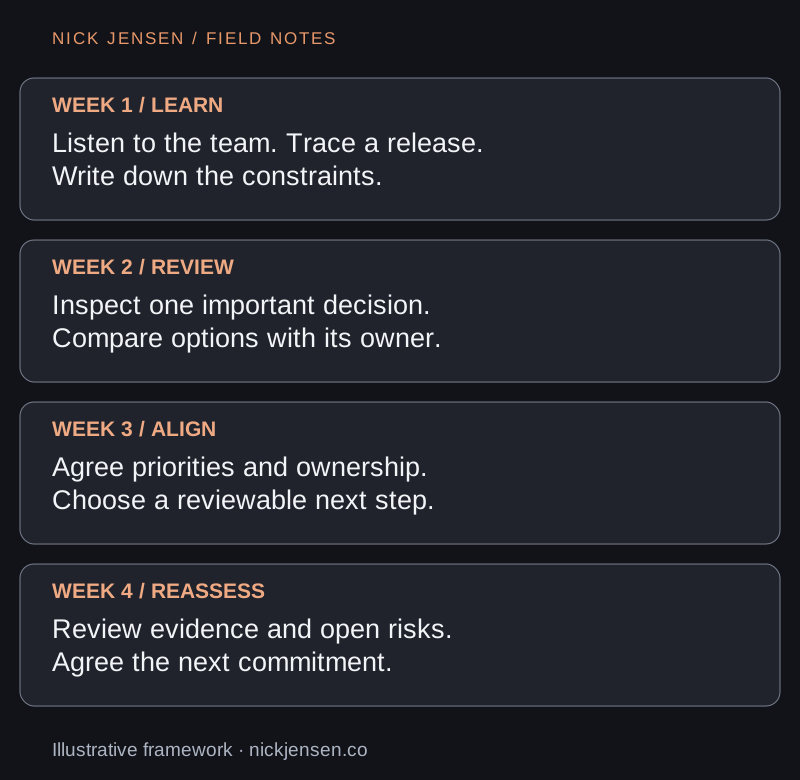
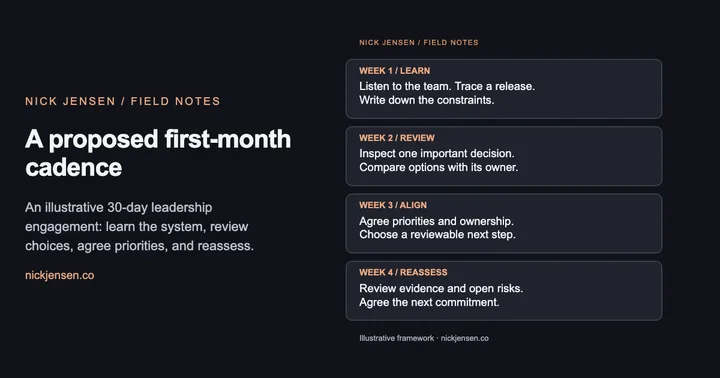
An illustrative 30-day leadership engagement: learn the system, review choices, agree priorities, and reassess.
V04 / Illustrative framework
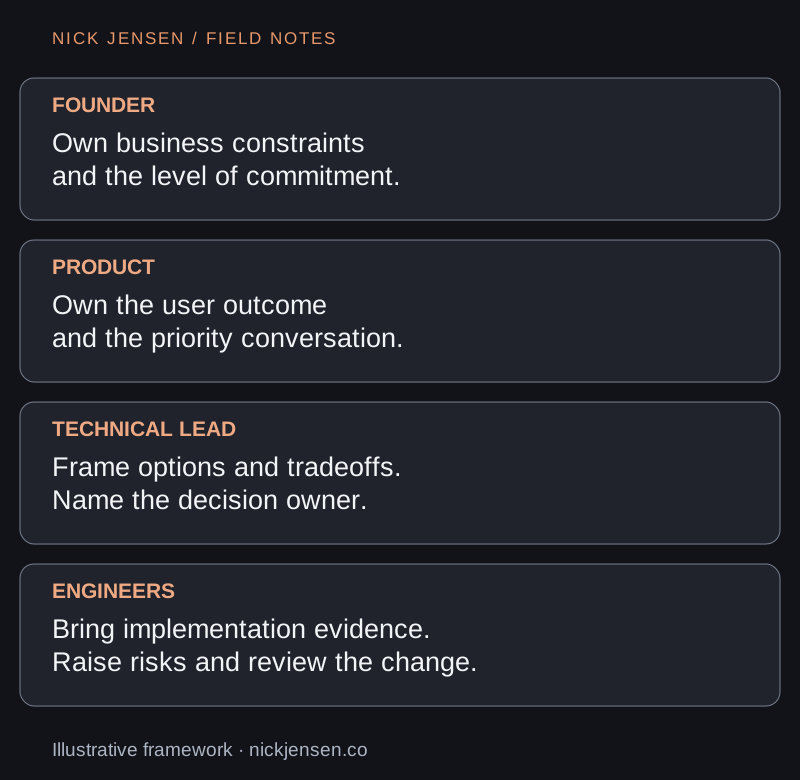
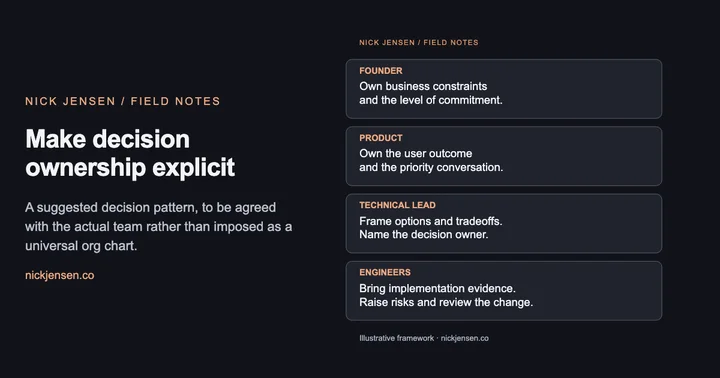
A suggested decision pattern, to be agreed with the actual team rather than imposed as a universal org chart.
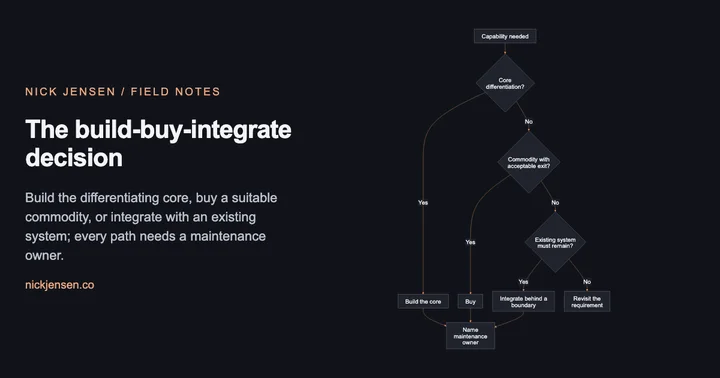
V05 / Illustrative framework
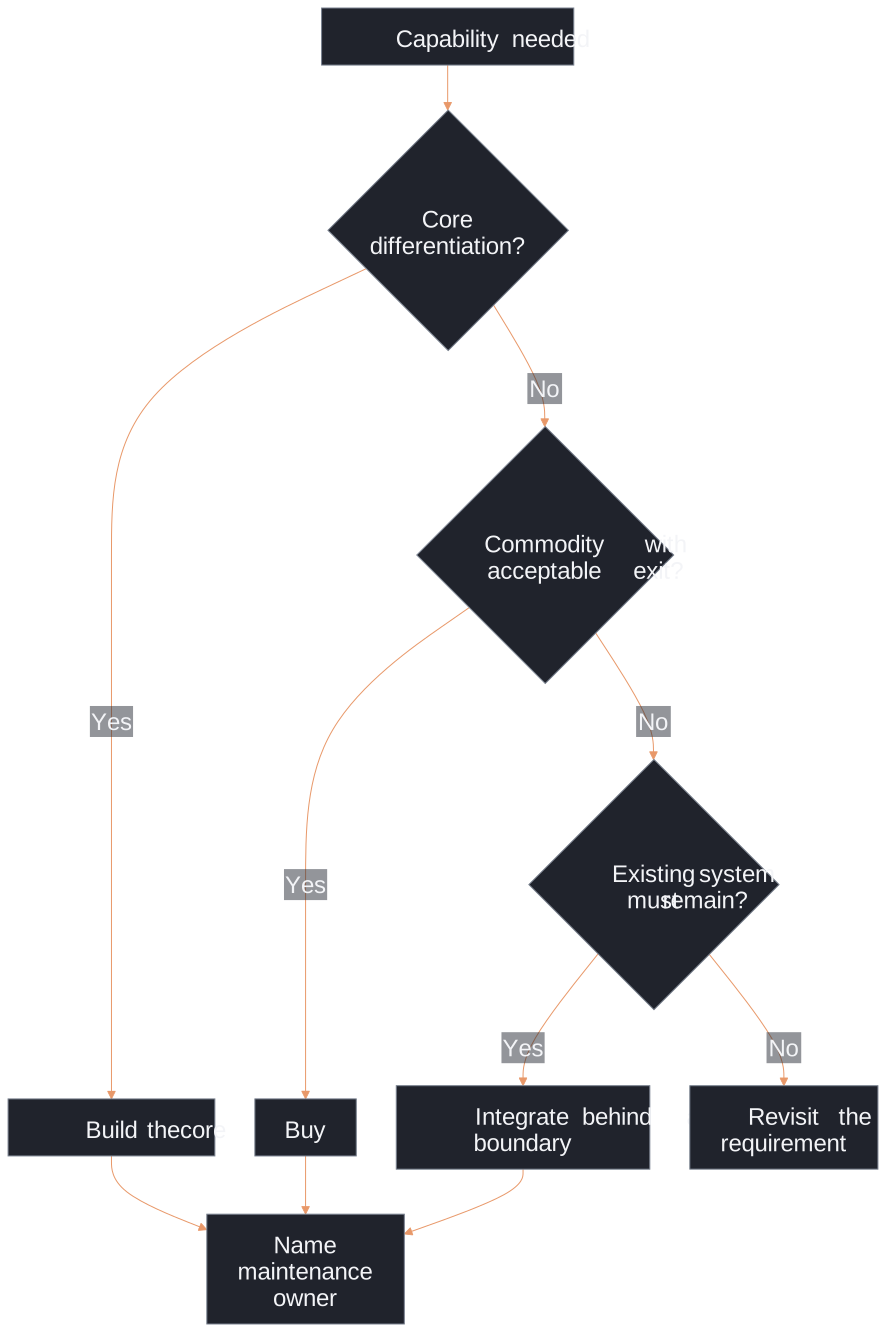
Build the differentiating core, buy a suitable commodity, or integrate with an existing system; every path needs a maintenance owner.
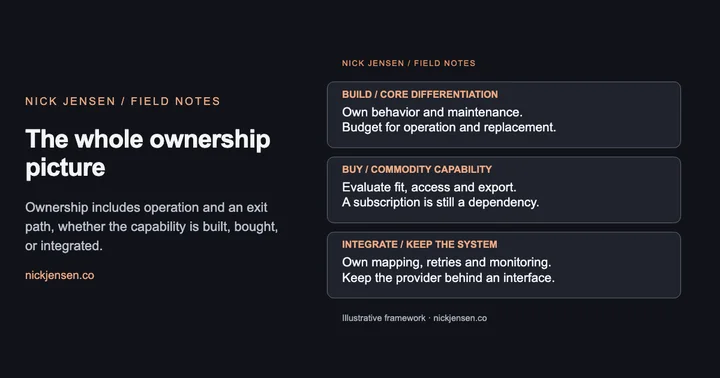
V06 / Illustrative framework
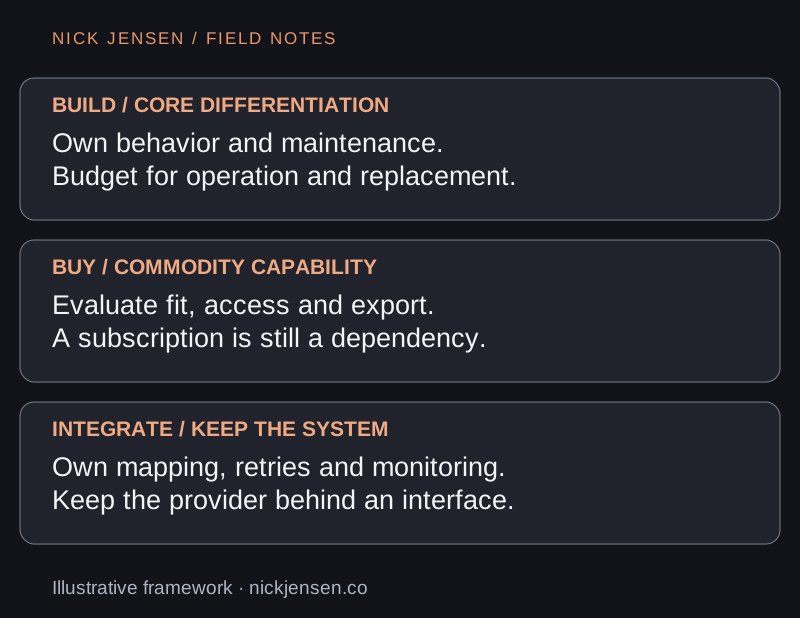
Ownership includes operation and an exit path, whether the capability is built, bought, or integrated.
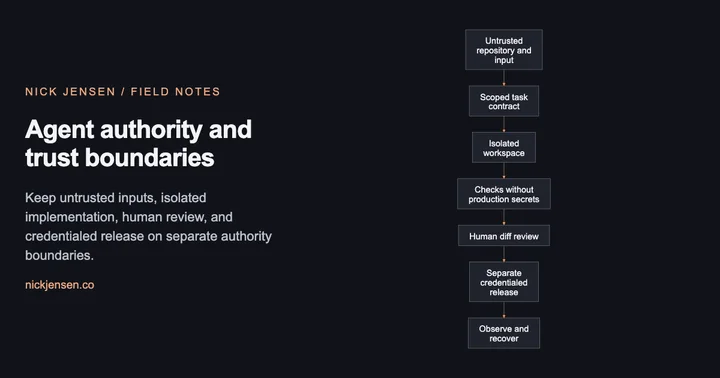
V07 / Illustrative framework
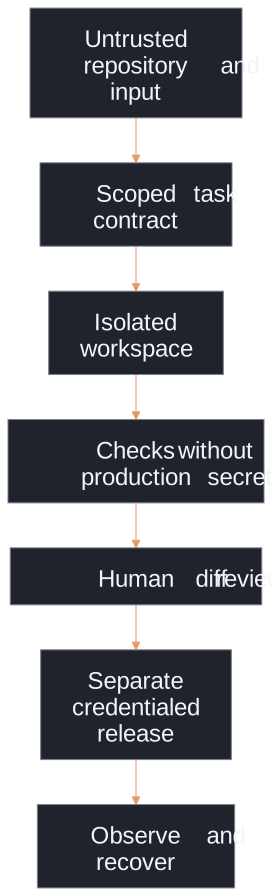
Keep untrusted inputs, isolated implementation, human review, and credentialed release on separate authority boundaries.
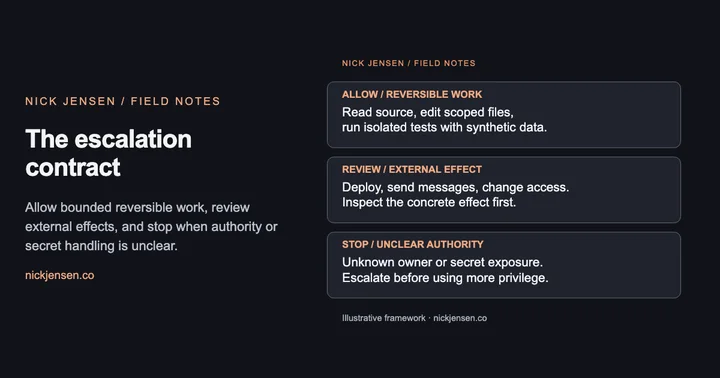
V08 / Illustrative framework
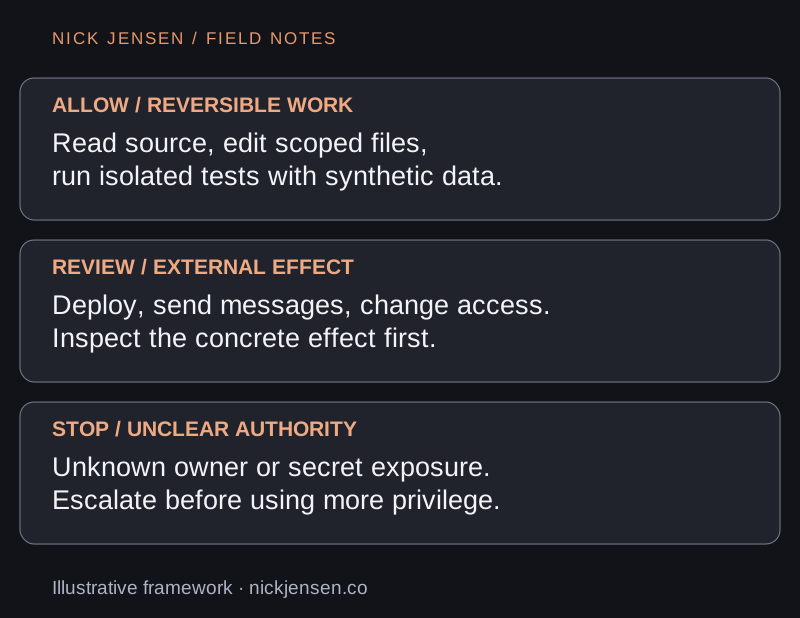
Allow bounded reversible work, review external effects, and stop when authority or secret handling is unclear.
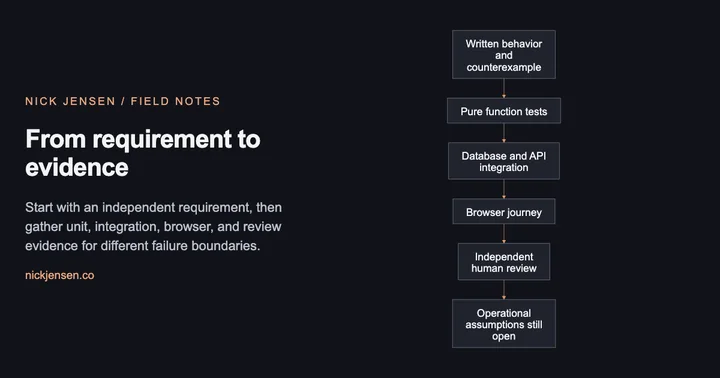
V09 / Illustrative framework
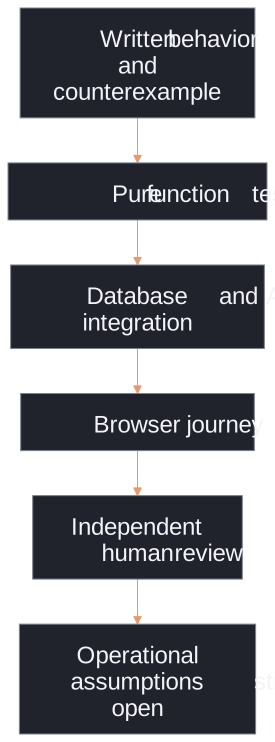
Start with an independent requirement, then gather unit, integration, browser, and review evidence for different failure boundaries.
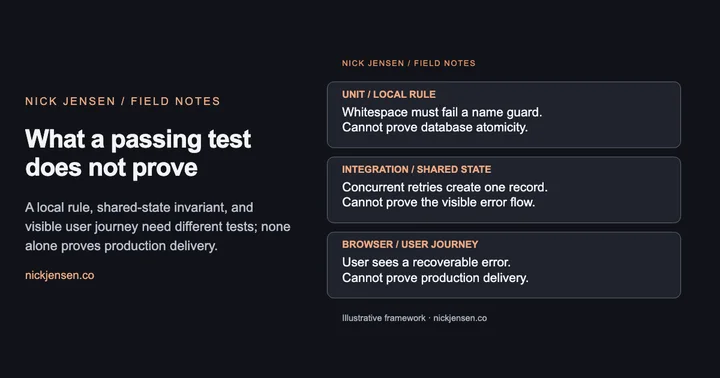
V10 / Illustrative framework
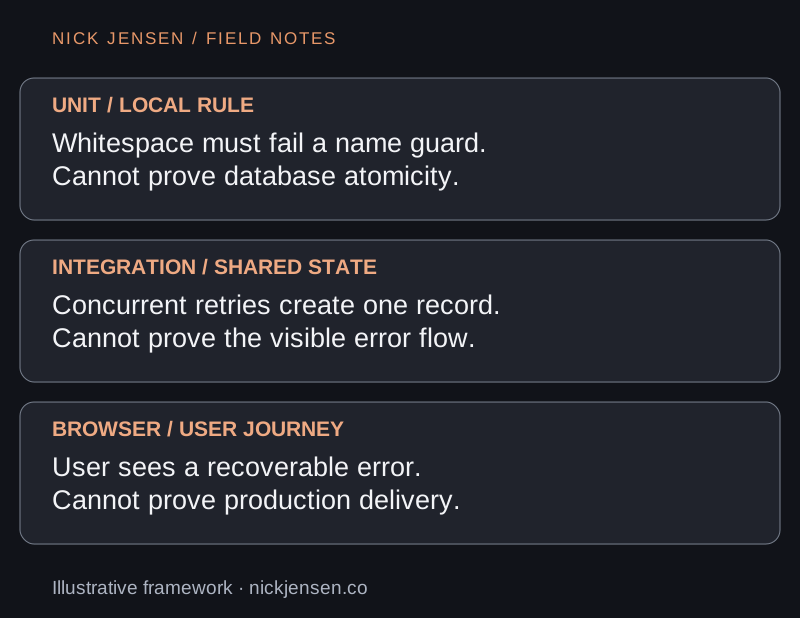
A local rule, shared-state invariant, and visible user journey need different tests; none alone proves production delivery.
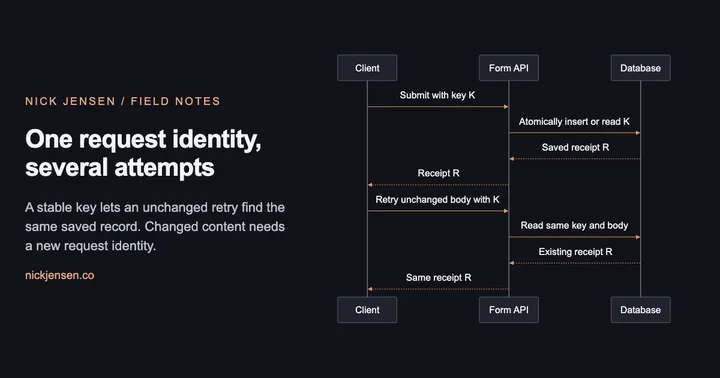
V11 / Based on the documented workflow
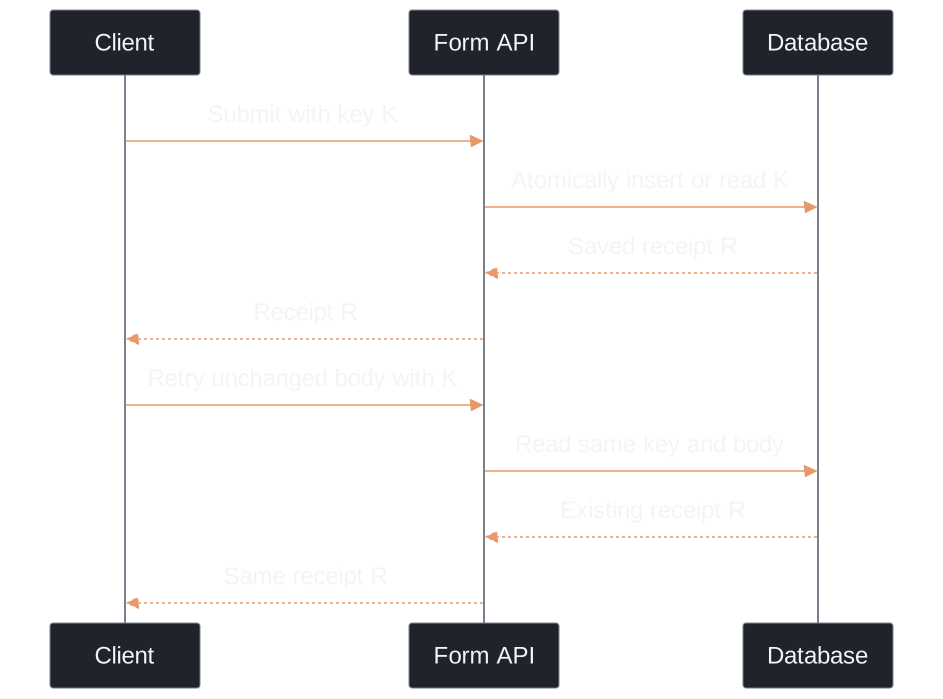
A stable key lets an unchanged retry find the same saved record. Changed content needs a new request identity.
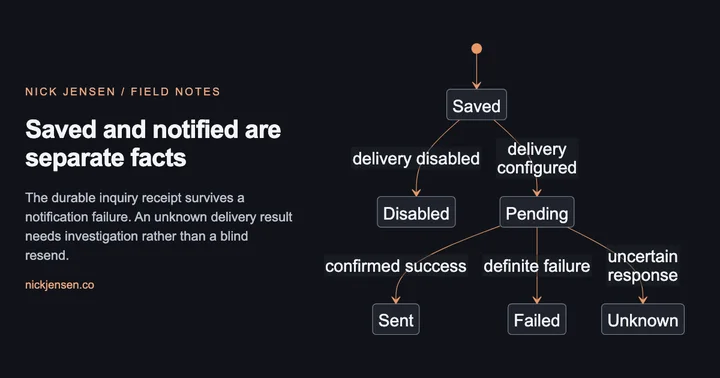
V12 / Based on the documented workflow
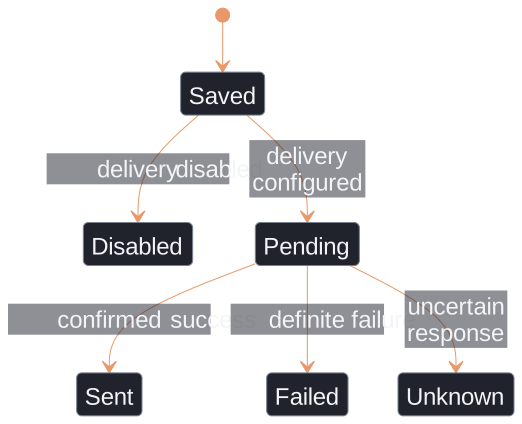
The durable inquiry receipt survives a notification failure. An unknown delivery result needs investigation rather than a blind resend.
V13 / Illustrative framework
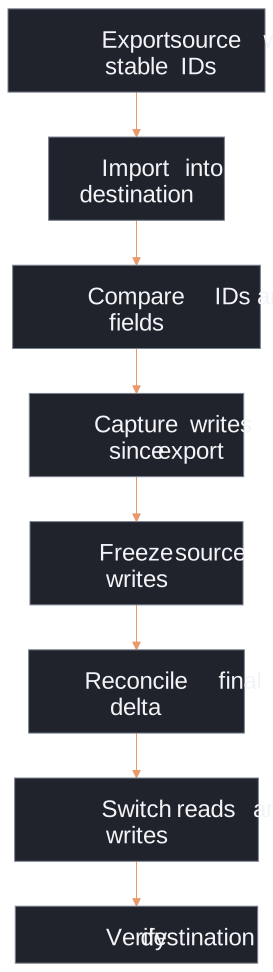
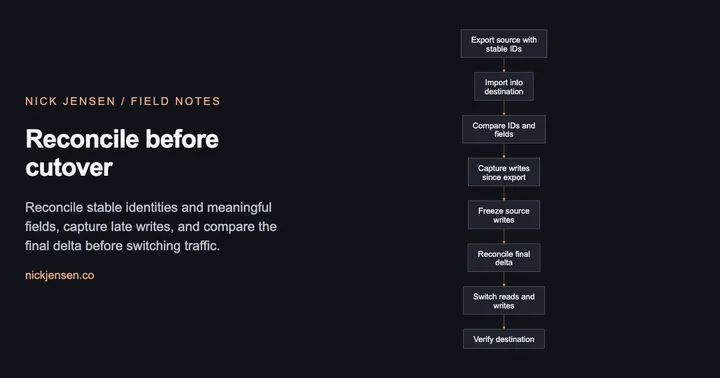
Reconcile stable identities and meaningful fields, capture late writes, and compare the final delta before switching traffic.
V14 / Illustrative framework
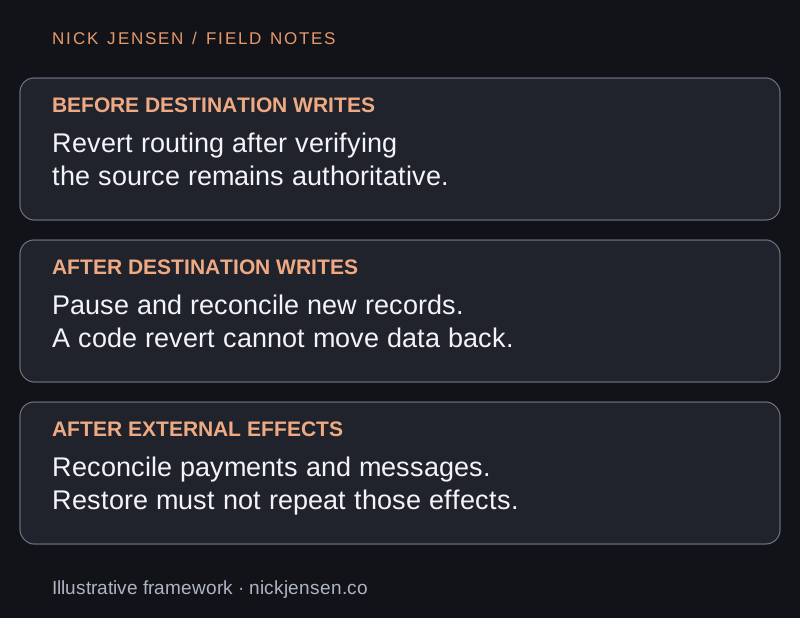
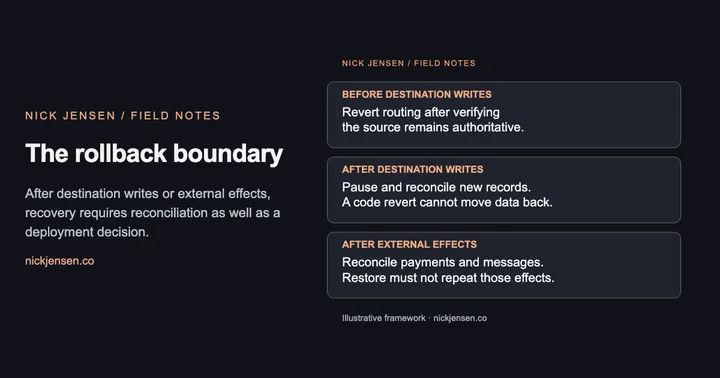
After destination writes or external effects, recovery requires reconciliation as well as a deployment decision.
V15 / Illustrative framework
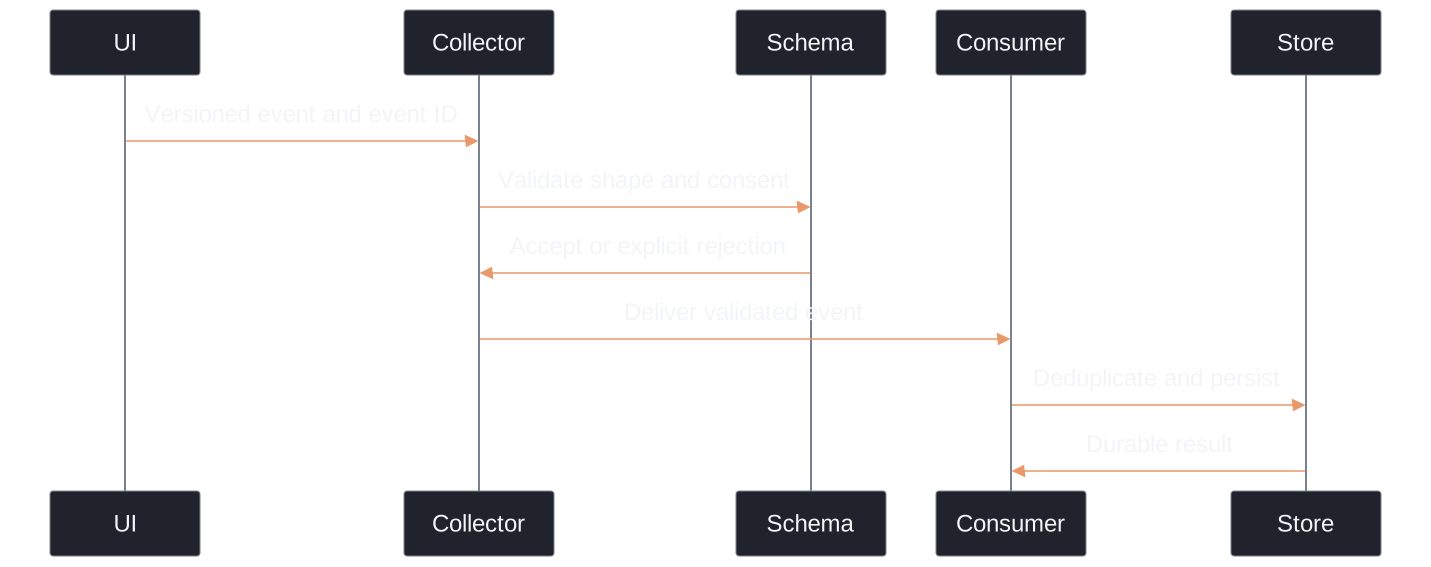
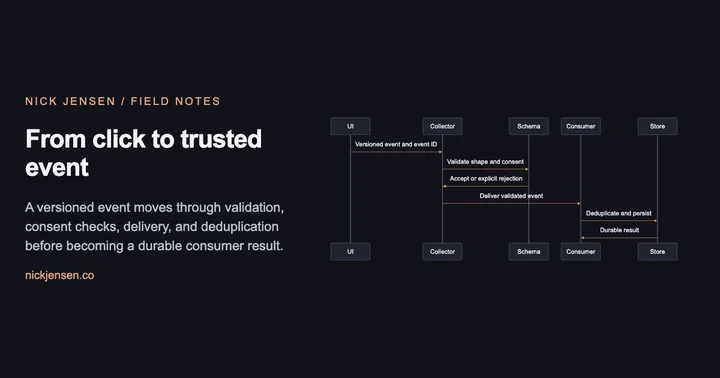
A versioned event moves through validation, consent checks, delivery, and deduplication before becoming a durable consumer result.
V16 / Illustrative framework
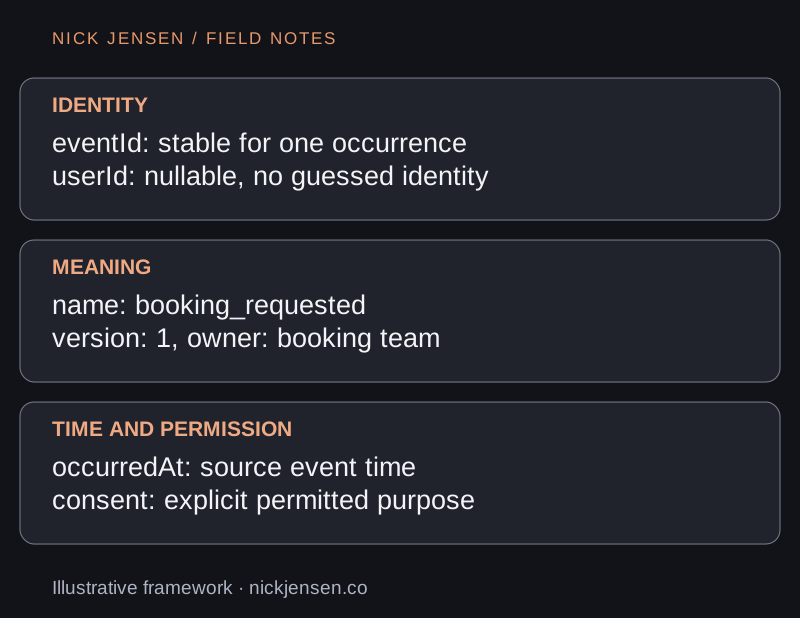
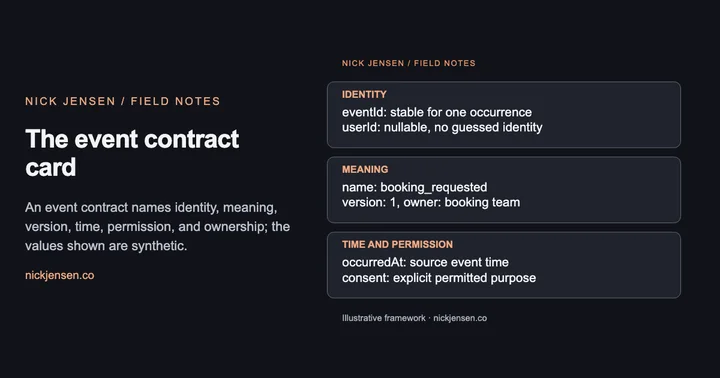
An event contract names identity, meaning, version, time, permission, and ownership; the values shown are synthetic.
V17 / Illustrative framework
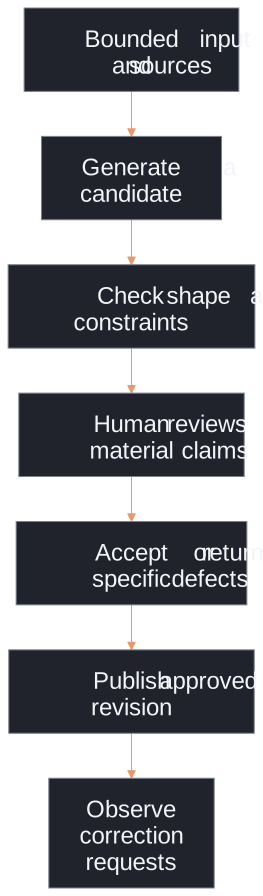
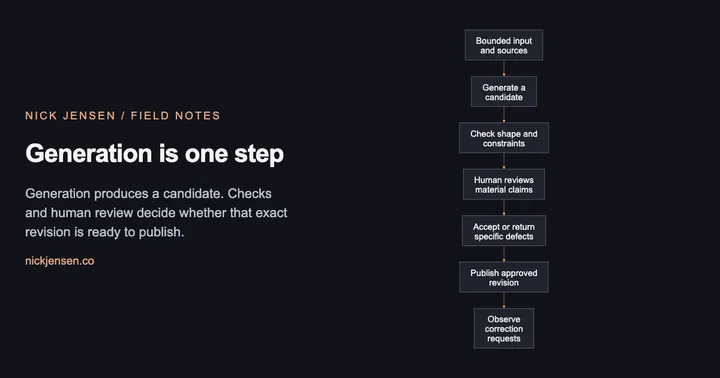
Generation produces a candidate. Checks and human review decide whether that exact revision is ready to publish.
V18 / Illustrative framework
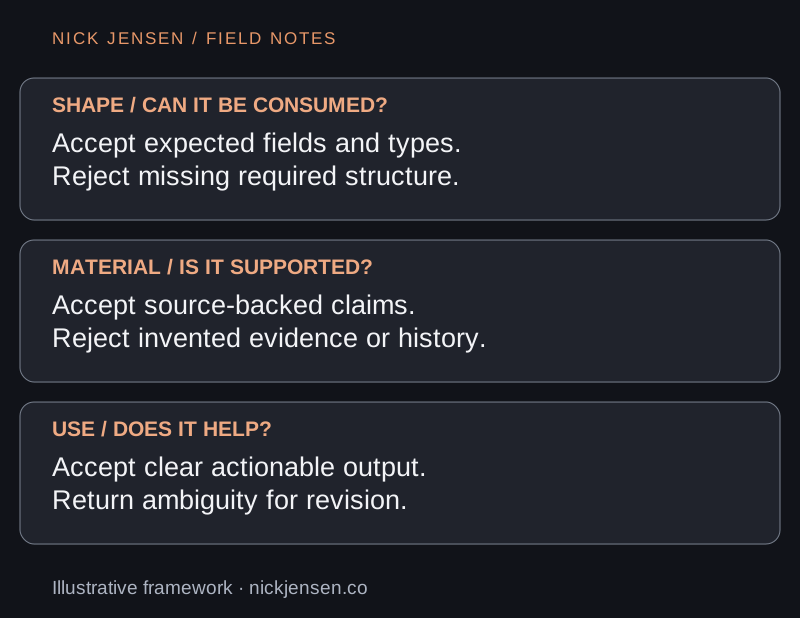
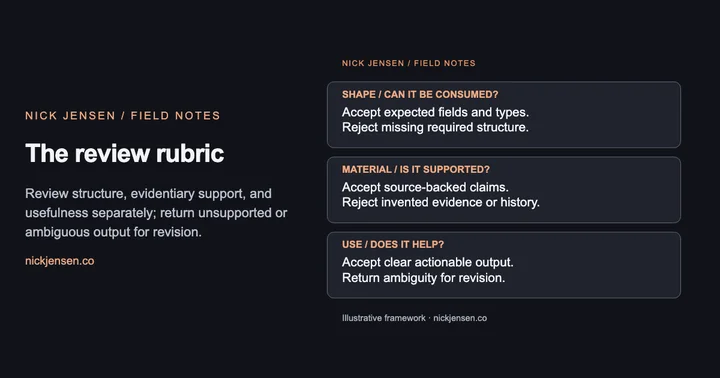
Review structure, evidentiary support, and usefulness separately; return unsupported or ambiguous output for revision.
V19 / Illustrative framework
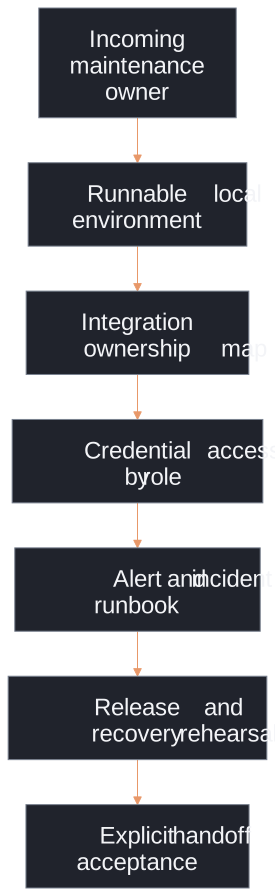
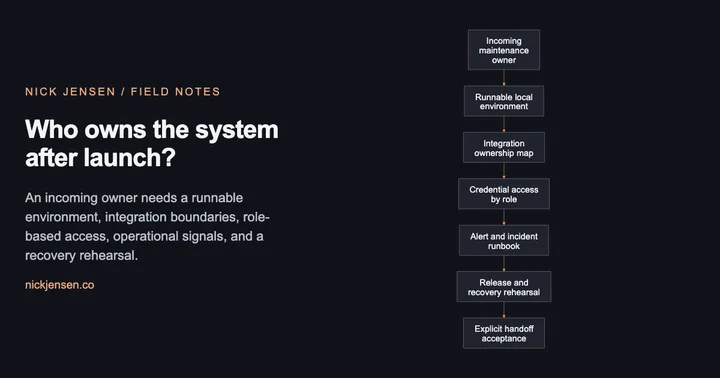
An incoming owner needs a runnable environment, integration boundaries, role-based access, operational signals, and a recovery rehearsal.
V20 / Illustrative framework
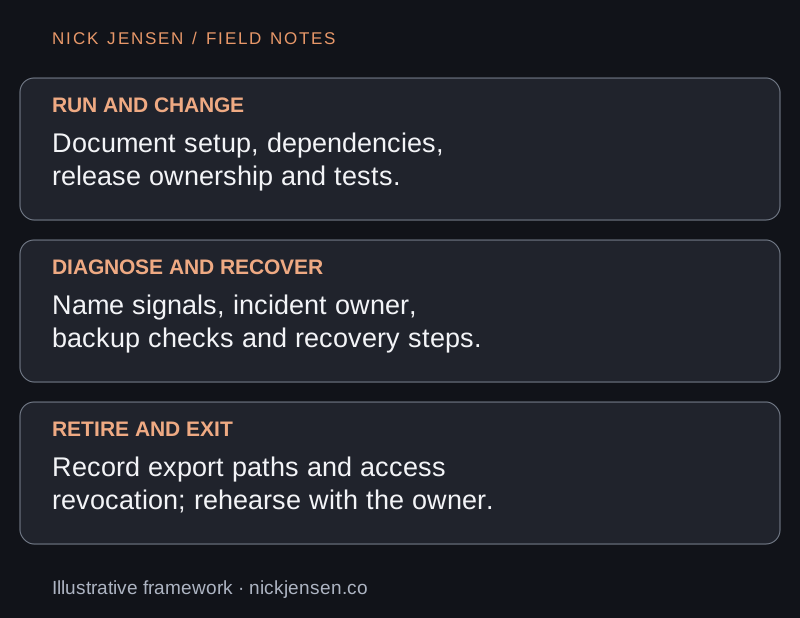
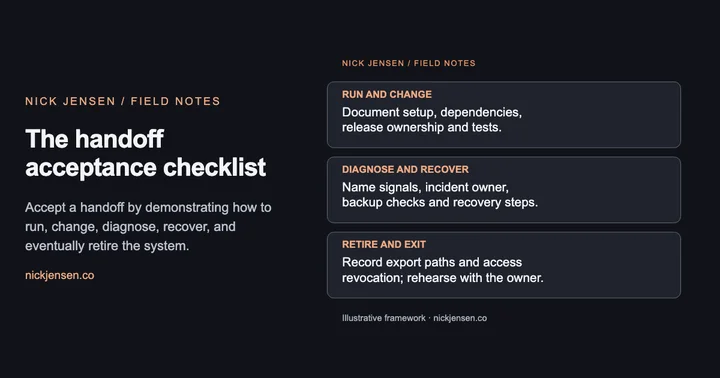
Accept a handoff by demonstrating how to run, change, diagnose, recover, and eventually retire the system.
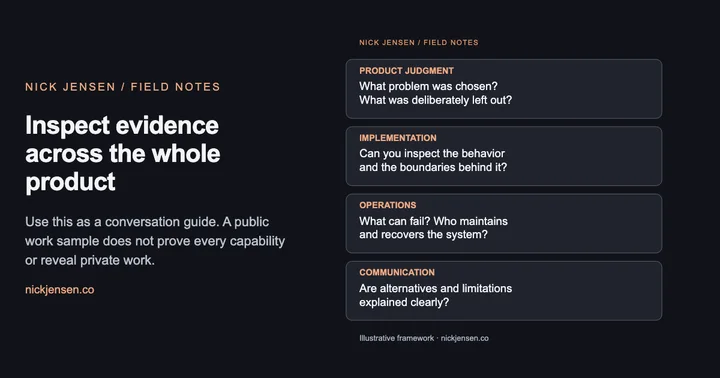
V21 / Illustrative framework
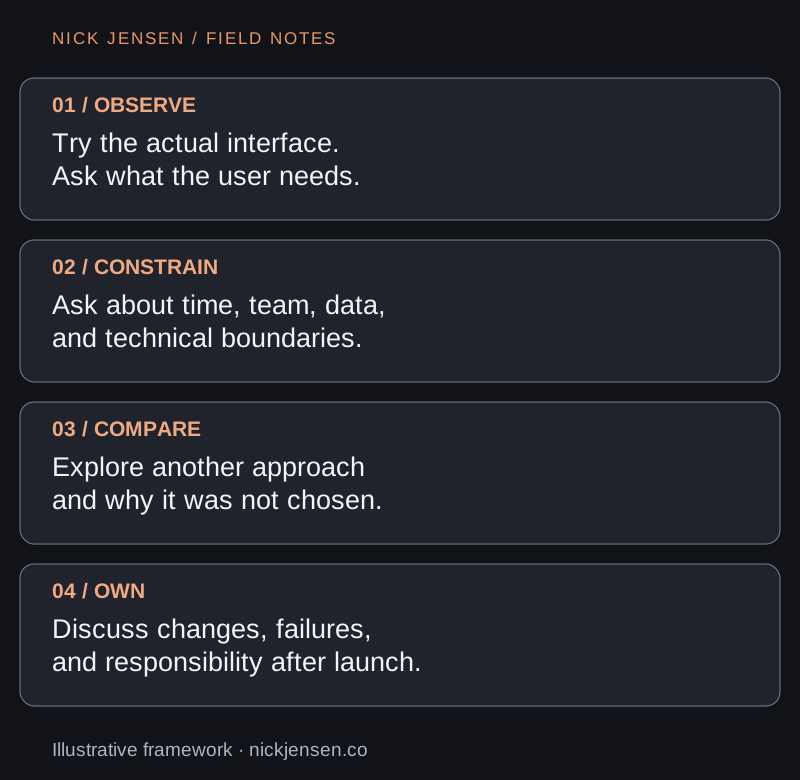
Use this as a conversation guide. A public work sample does not prove every capability or reveal private work.
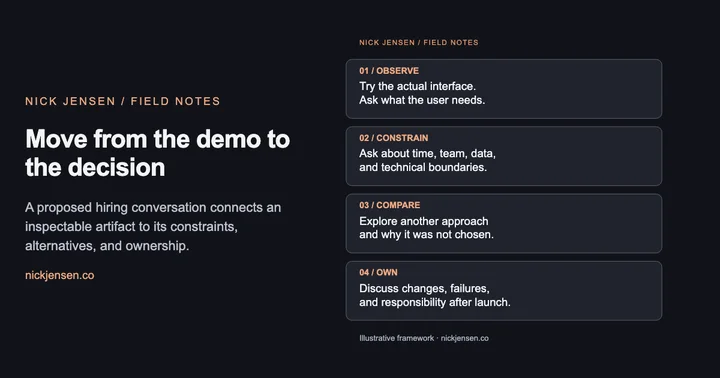
V22 / Illustrative framework
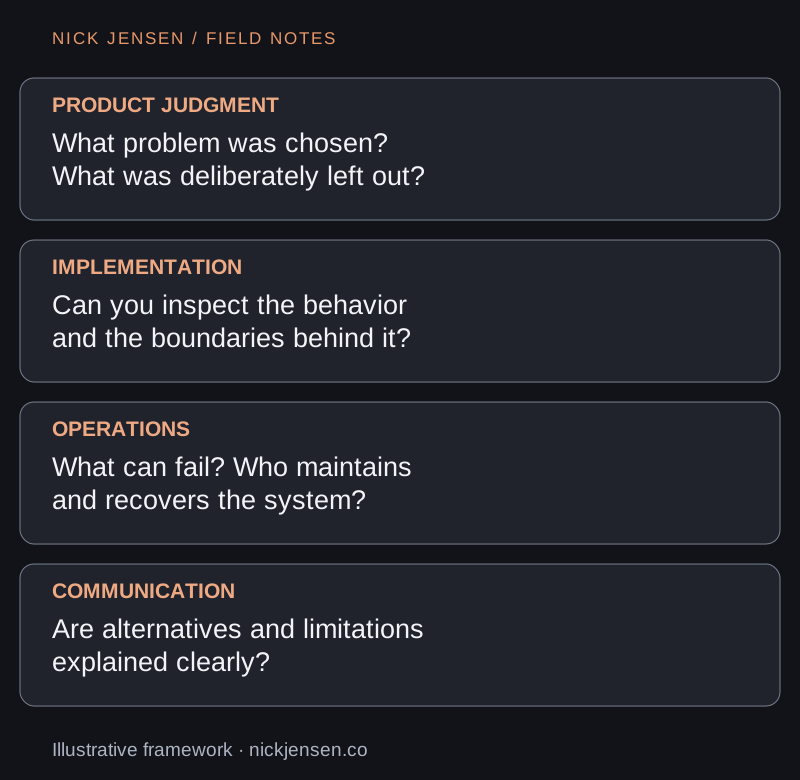
A proposed hiring conversation connects an inspectable artifact to its constraints, alternatives, and ownership.
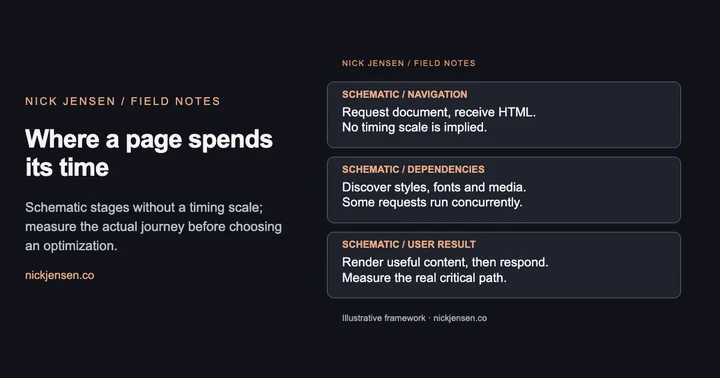
V23 / Illustrative framework
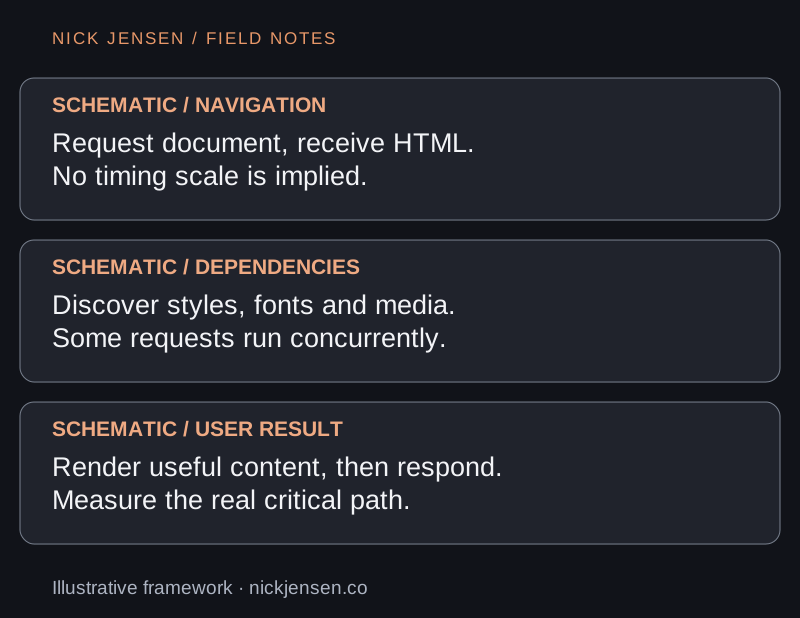
Schematic stages without a timing scale; measure the actual journey before choosing an optimization.
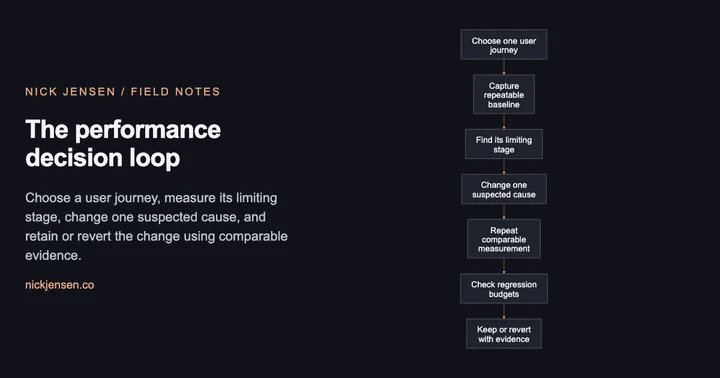
V24 / Illustrative framework
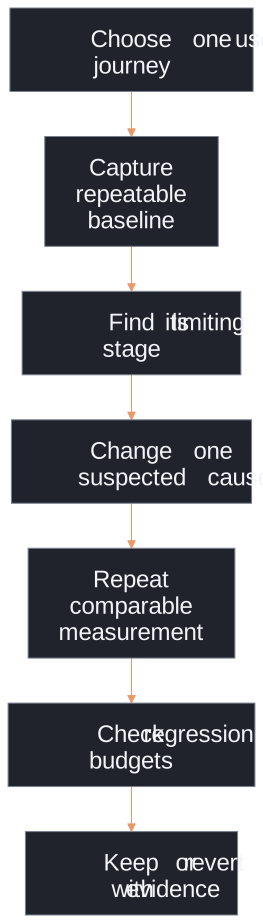
Choose a user journey, measure its limiting stage, change one suspected cause, and retain or revert the change using comparable evidence.
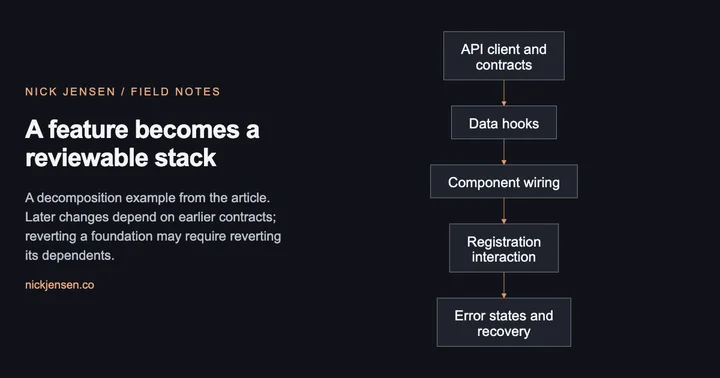
V41 / Based on the documented workflow
A decomposition example from the article. Later changes depend on earlier contracts; reverting a foundation may require reverting its dependents.
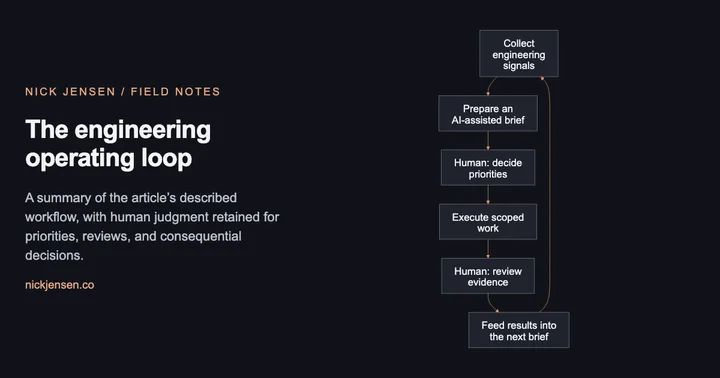
V42 / Based on the documented workflow
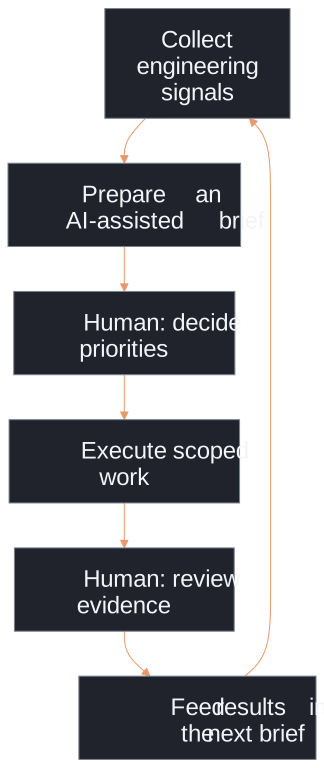
A summary of the article’s described workflow, with human judgment retained for priorities, reviews, and consequential decisions.
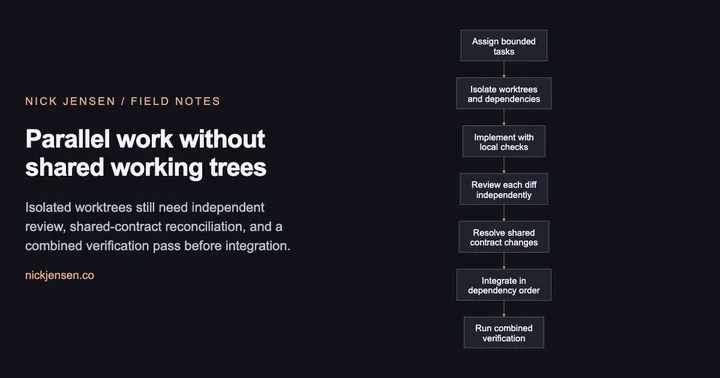
V43 / Illustrative framework
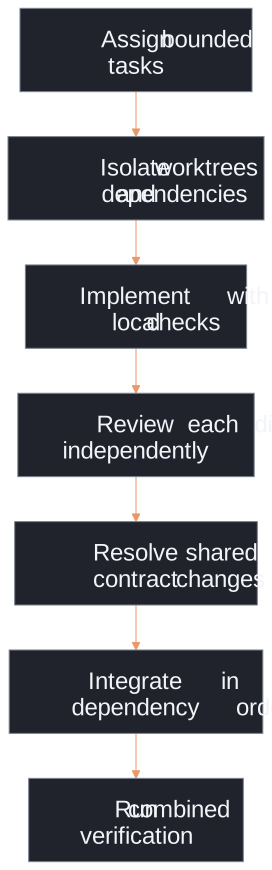
Isolated worktrees still need independent review, shared-contract reconciliation, and a combined verification pass before integration.
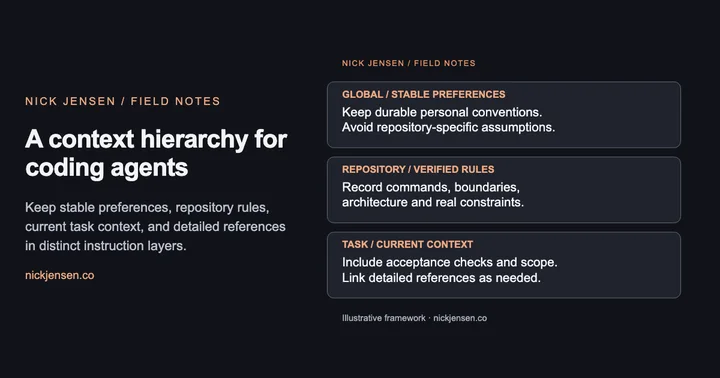
V44 / Illustrative framework
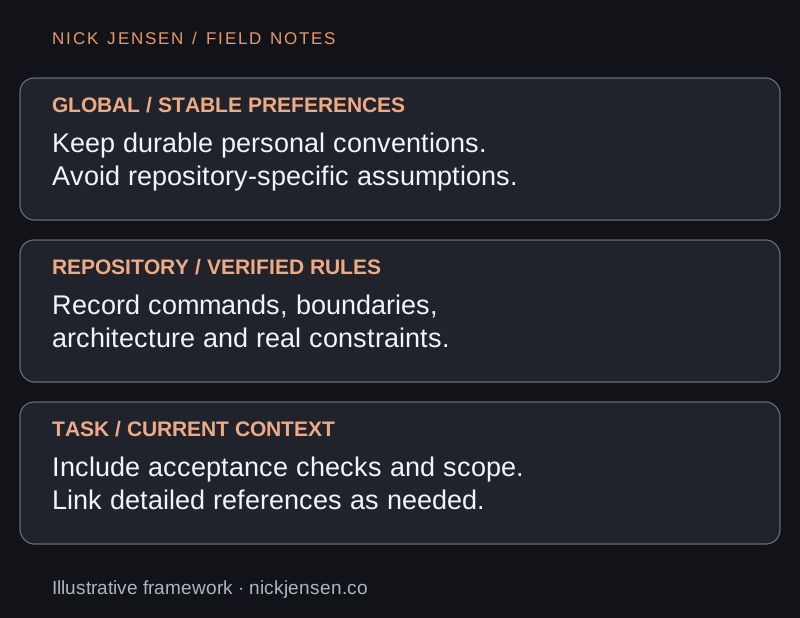
Keep stable preferences, repository rules, current task context, and detailed references in distinct instruction layers.
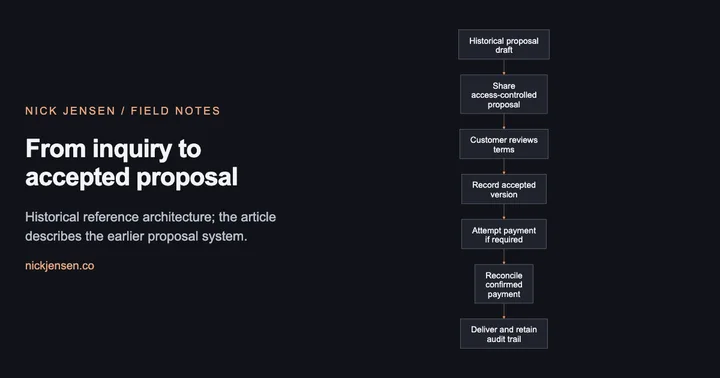
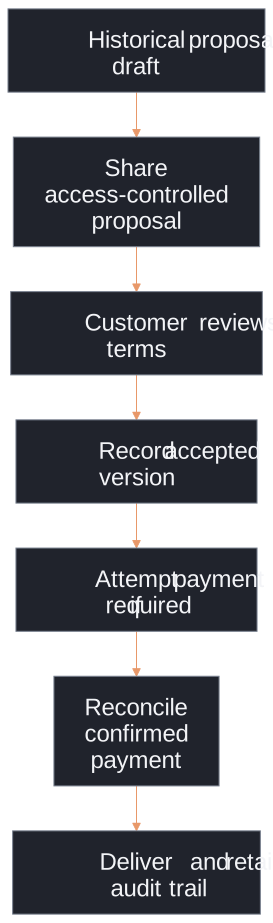
V45 / Illustrative framework
Historical reference architecture; the article describes the earlier proposal system.
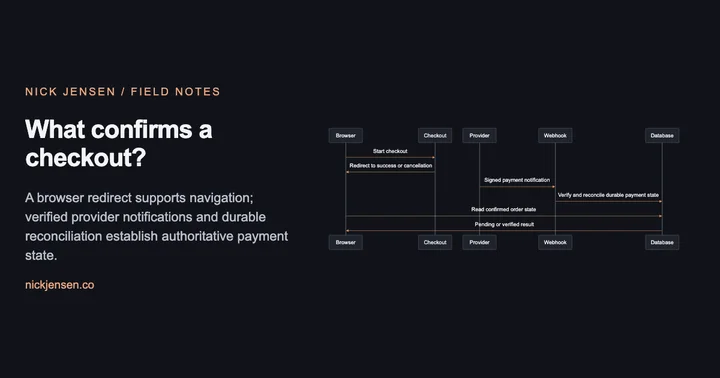
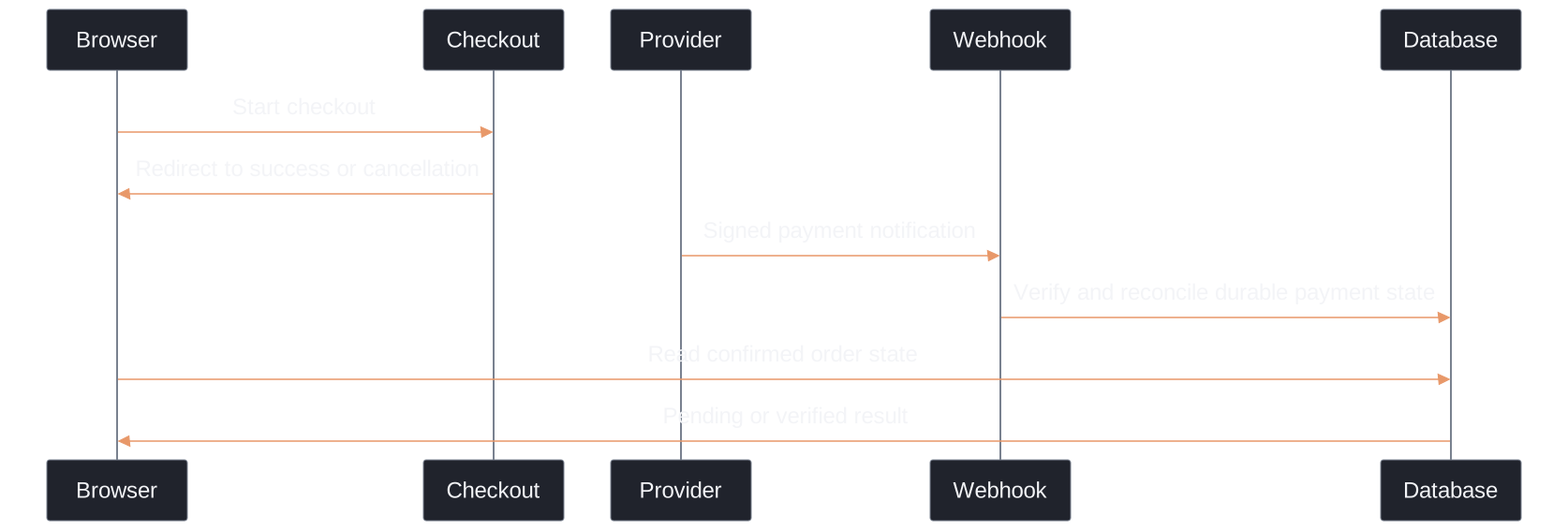
V46 / Illustrative framework
A browser redirect supports navigation; verified provider notifications and durable reconciliation establish authoritative payment state.
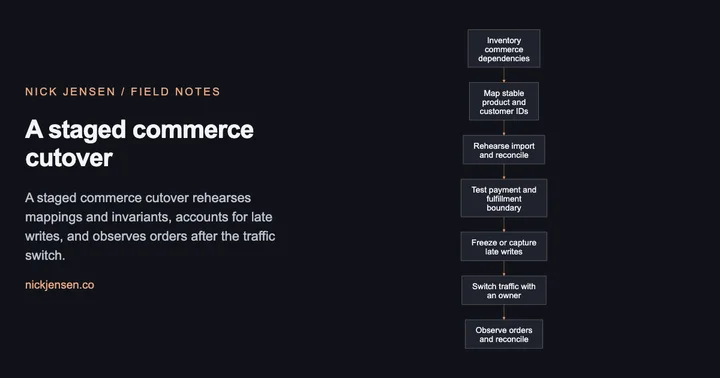
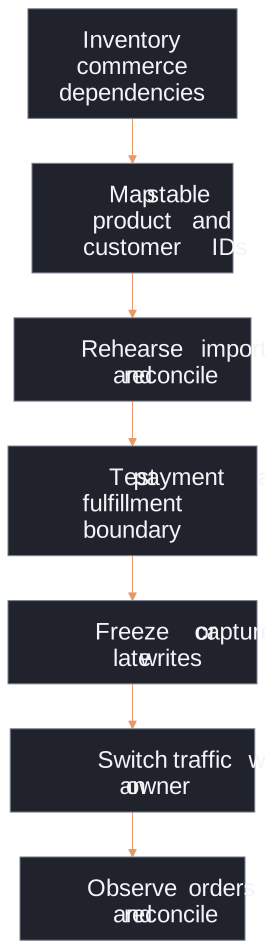
V47 / Illustrative framework
A staged commerce cutover rehearses mappings and invariants, accounts for late writes, and observes orders after the traffic switch.
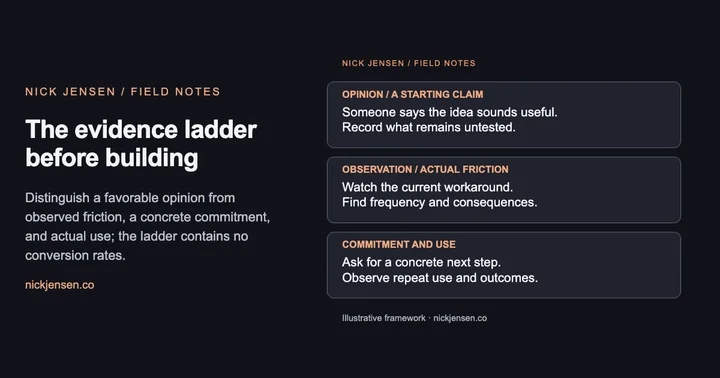
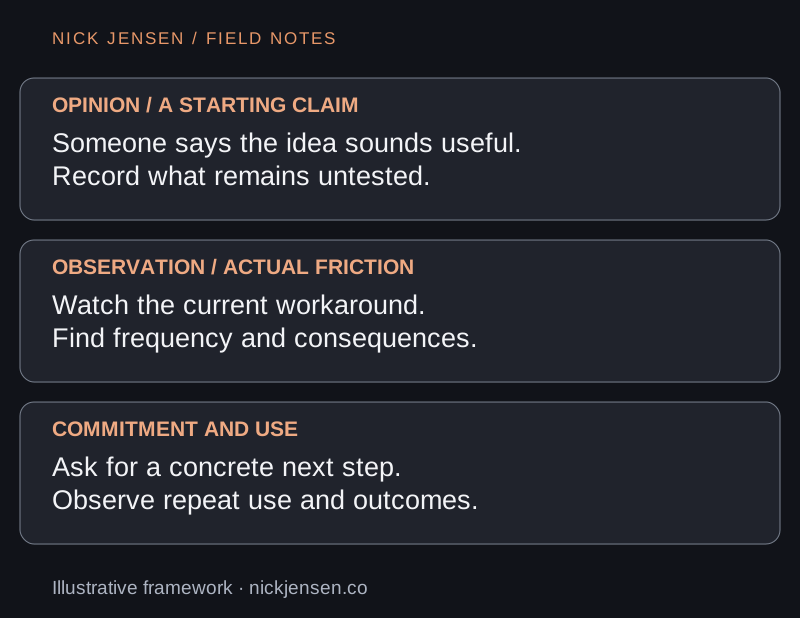
V48 / Illustrative framework
Distinguish a favorable opinion from observed friction, a concrete commitment, and actual use; the ladder contains no conversion rates.
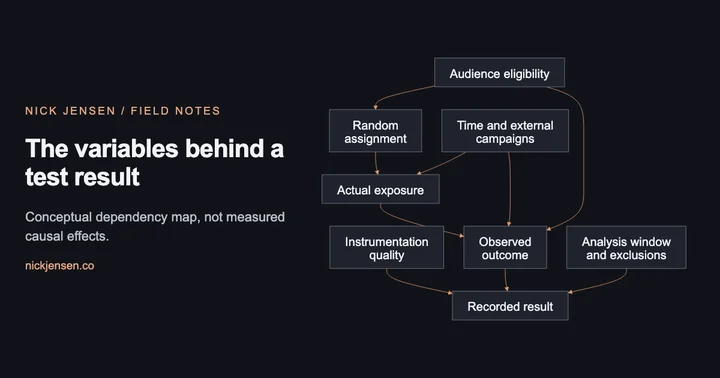
V49 / Illustrative framework
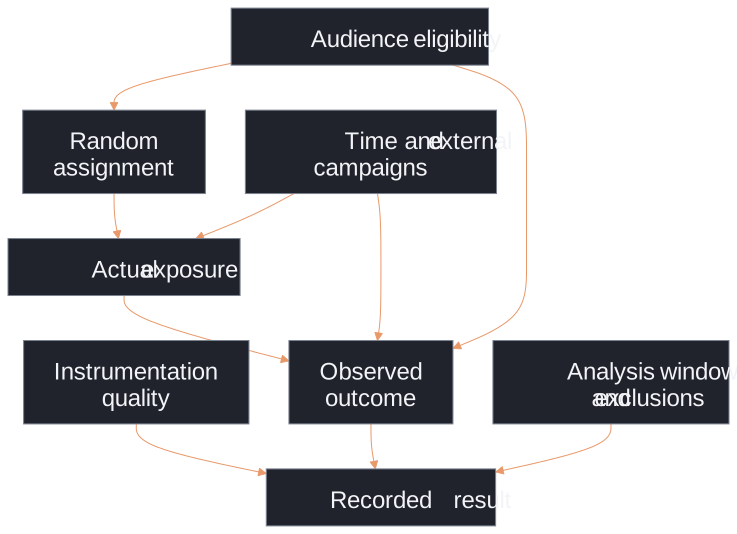
Conceptual dependency map, not measured causal effects.
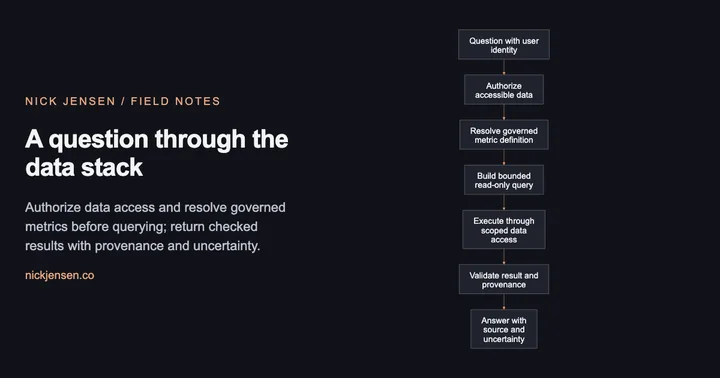
V50 / Illustrative framework
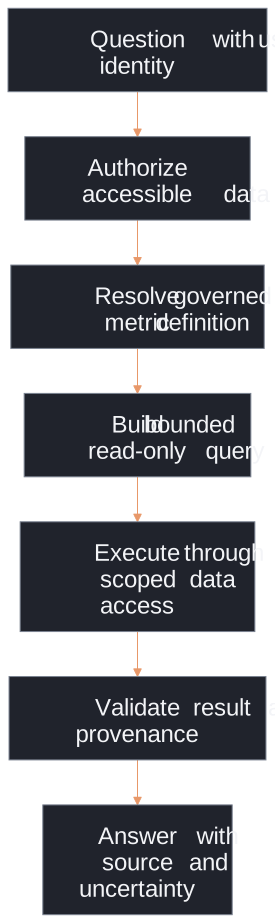
Authorize data access and resolve governed metrics before querying; return checked results with provenance and uncertainty.
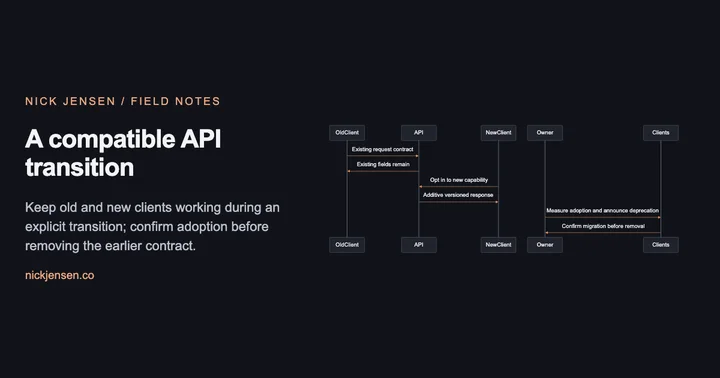
V25 / Illustrative framework
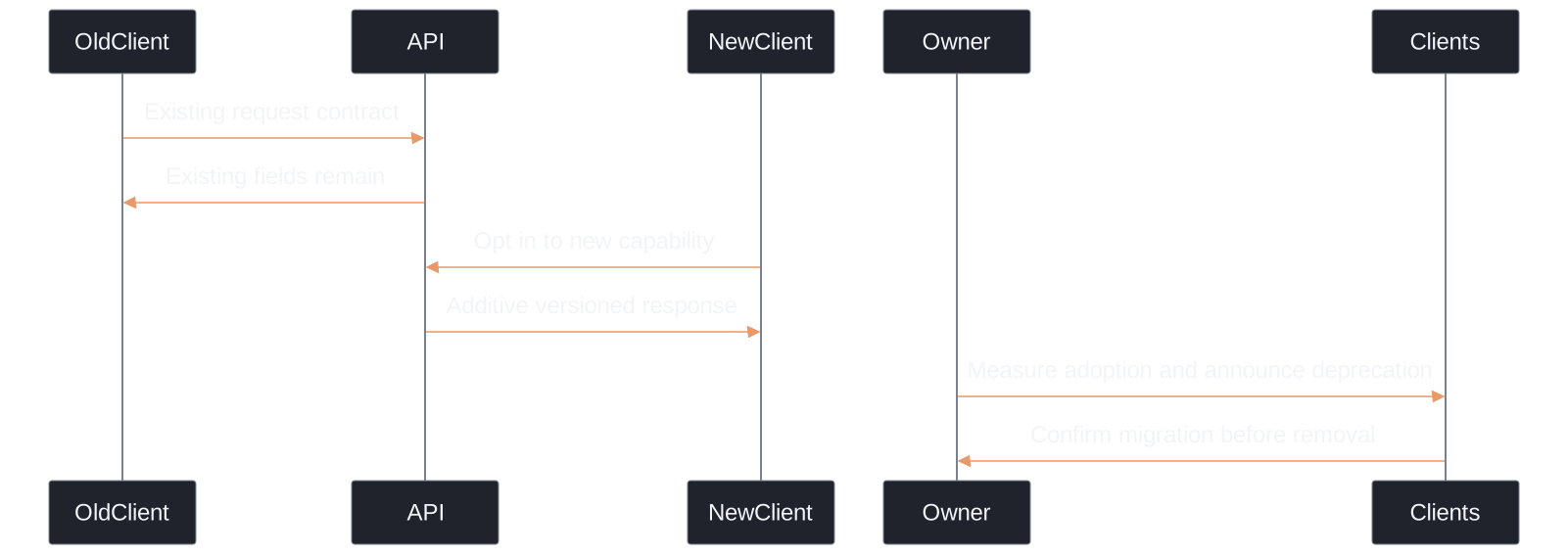
Keep old and new clients working during an explicit transition; confirm adoption before removing the earlier contract.
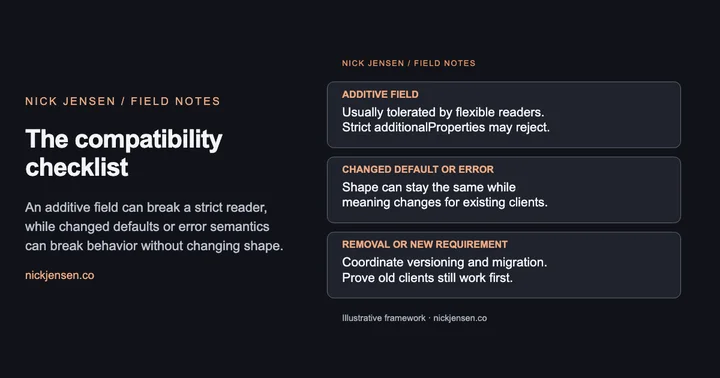
V26 / Illustrative framework
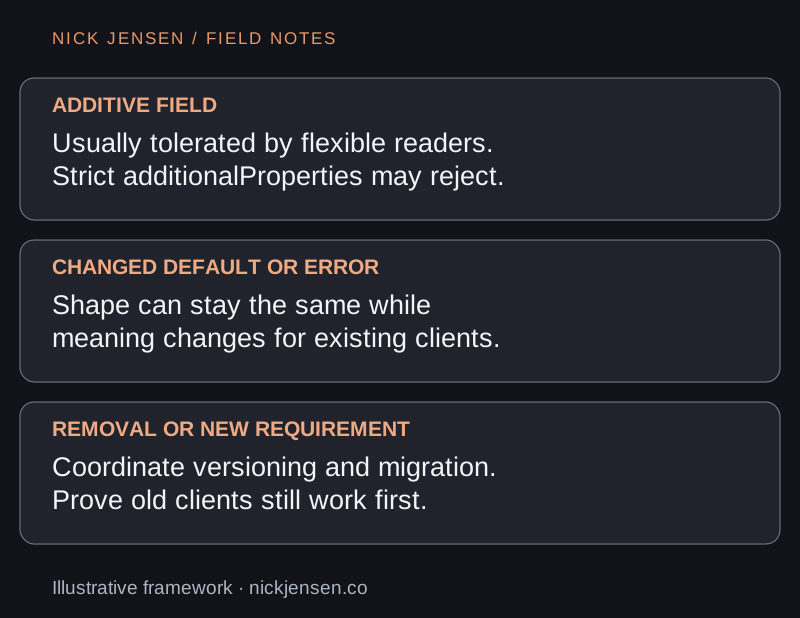
An additive field can break a strict reader, while changed defaults or error semantics can break behavior without changing shape.
V27 / Illustrative framework
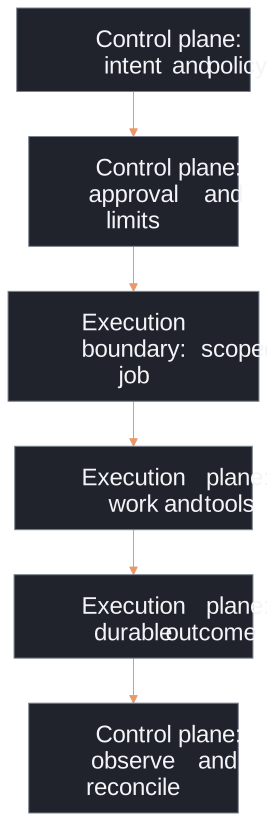
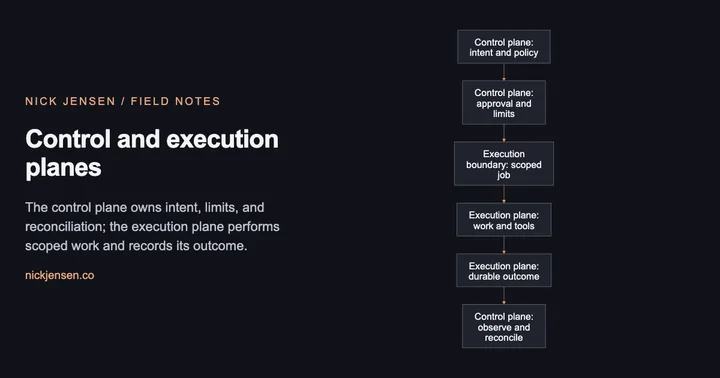
The control plane owns intent, limits, and reconciliation; the execution plane performs scoped work and records its outcome.
V28 / Illustrative framework
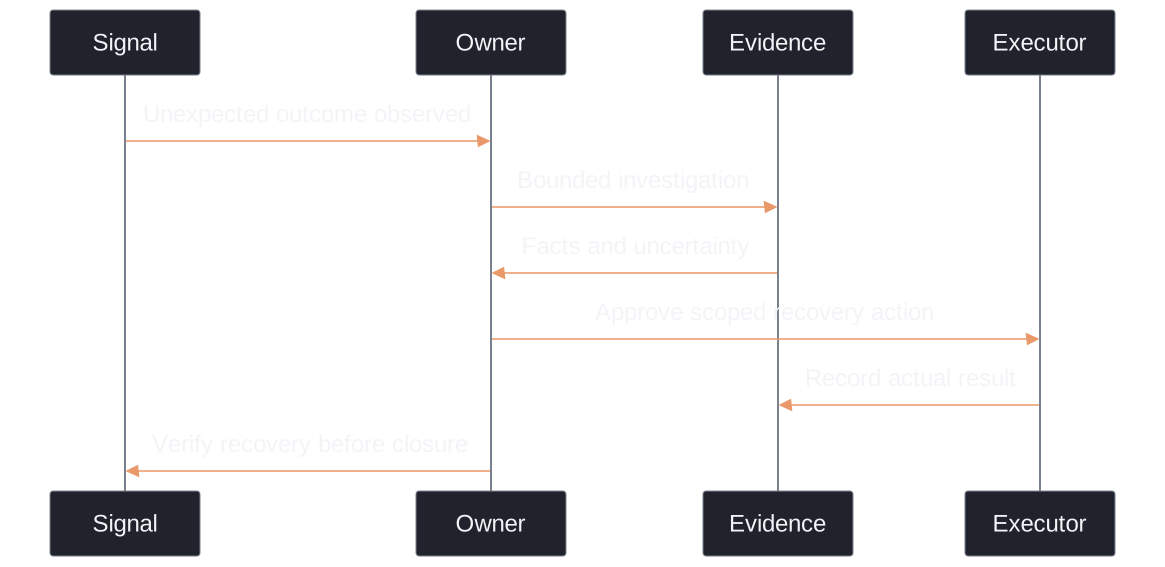
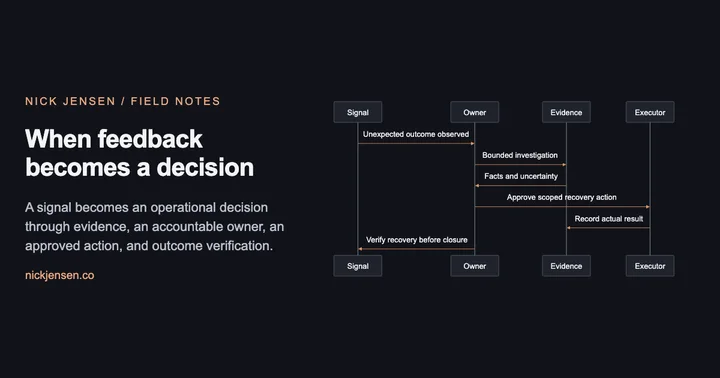
A signal becomes an operational decision through evidence, an accountable owner, an approved action, and outcome verification.
V29 / Illustrative framework
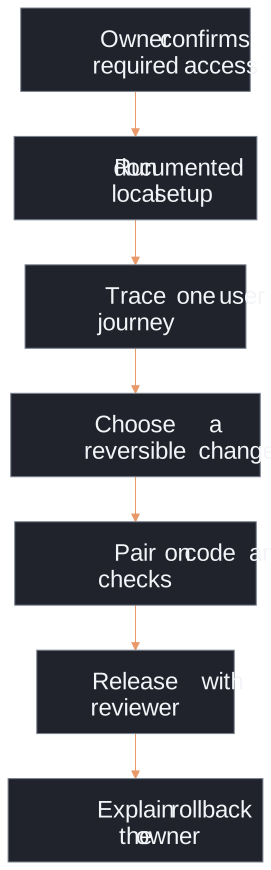
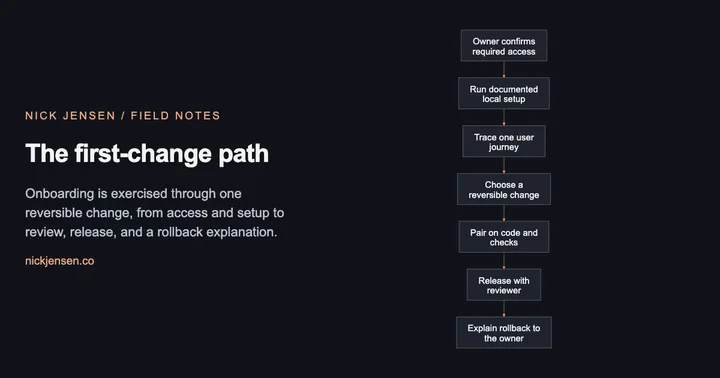
Onboarding is exercised through one reversible change, from access and setup to review, release, and a rollback explanation.
V30 / Illustrative framework
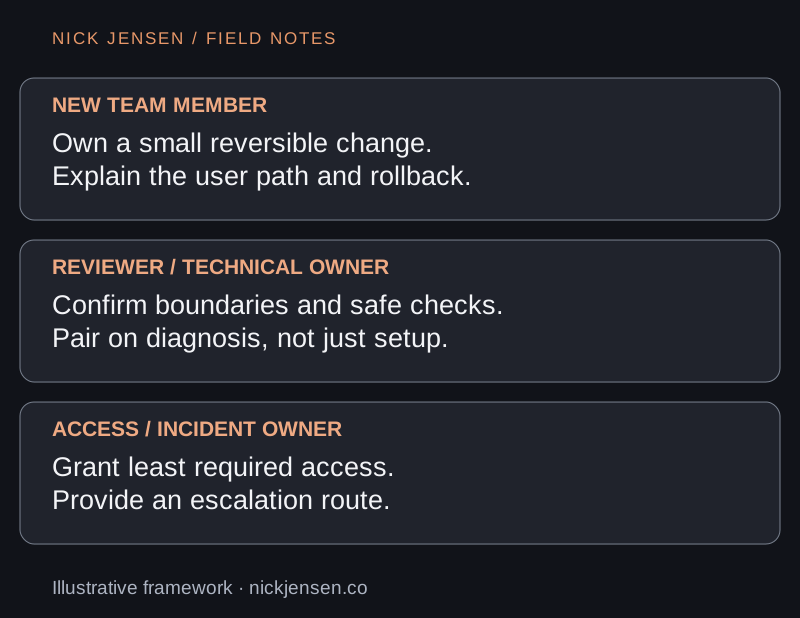
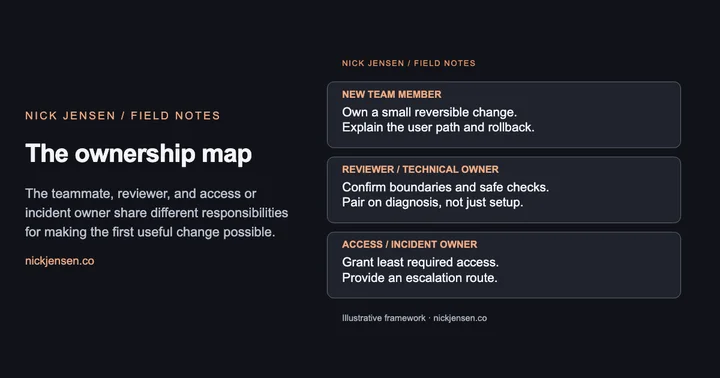
The teammate, reviewer, and access or incident owner share different responsibilities for making the first useful change possible.
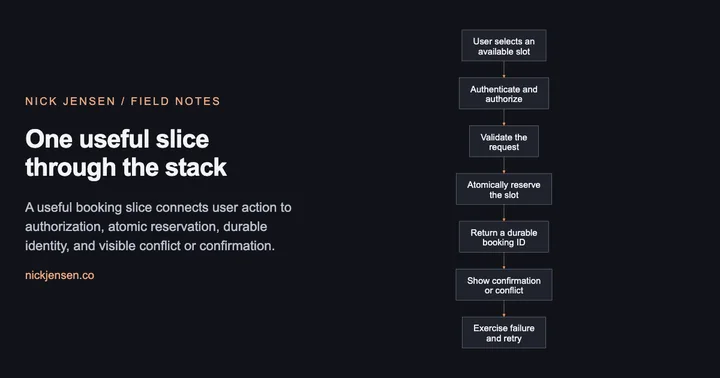
V31 / Illustrative framework
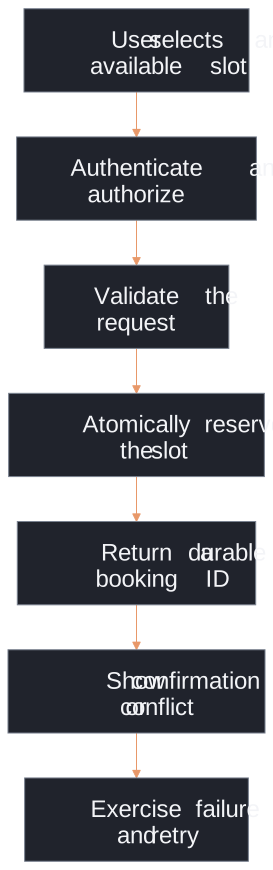
A useful booking slice connects user action to authorization, atomic reservation, durable identity, and visible conflict or confirmation.
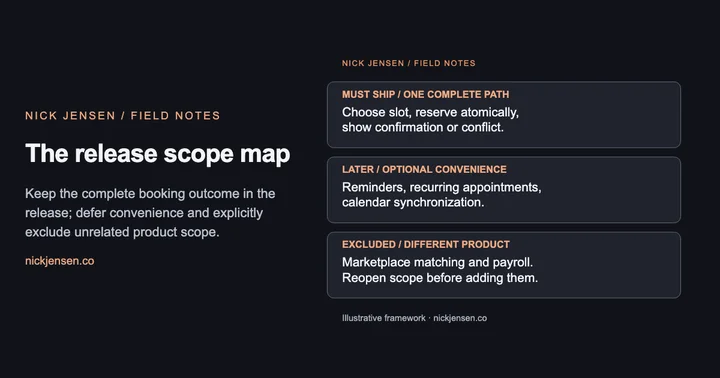
V32 / Illustrative framework
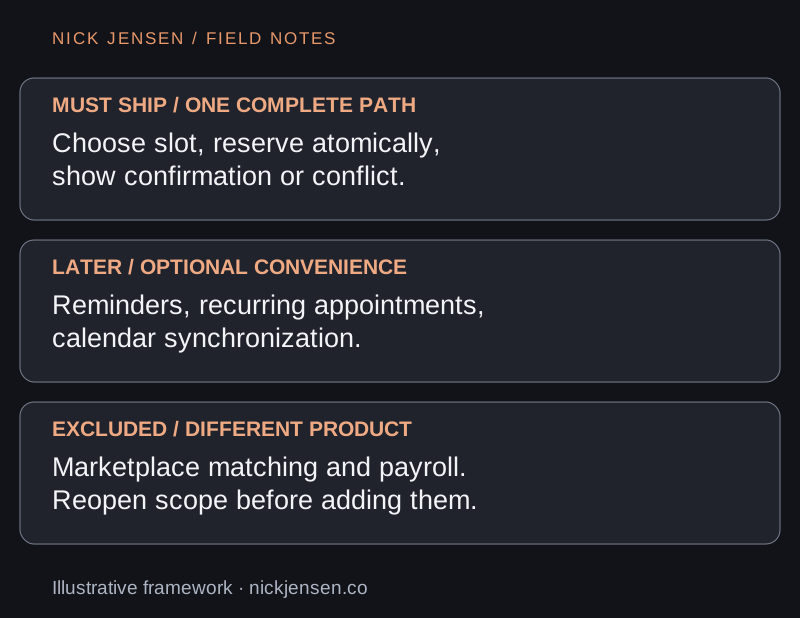
Keep the complete booking outcome in the release; defer convenience and explicitly exclude unrelated product scope.
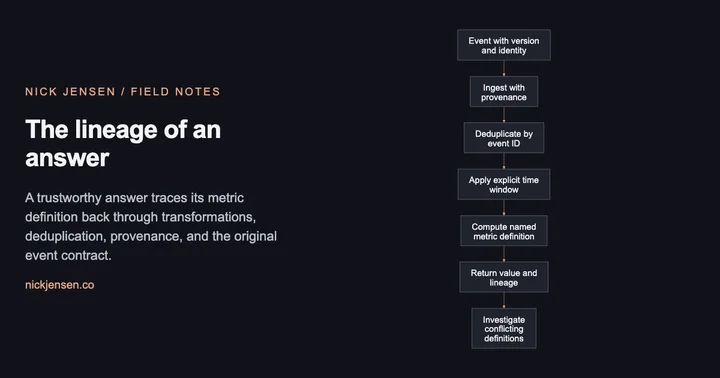
V33 / Illustrative framework
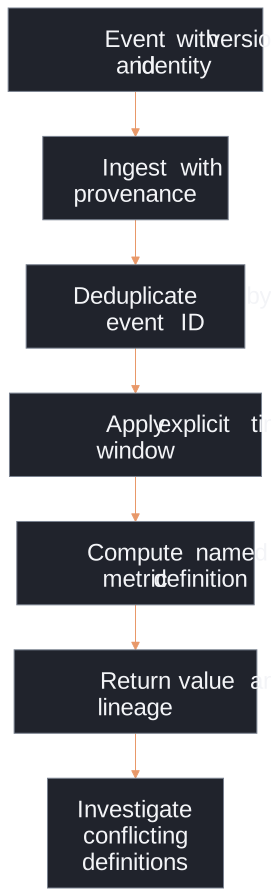
A trustworthy answer traces its metric definition back through transformations, deduplication, provenance, and the original event contract.
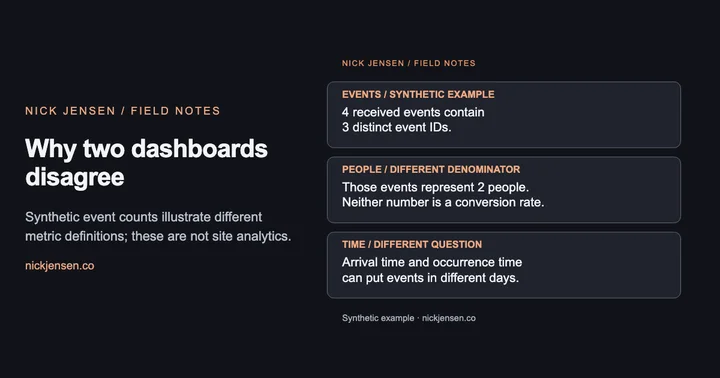
V34 / Synthetic example
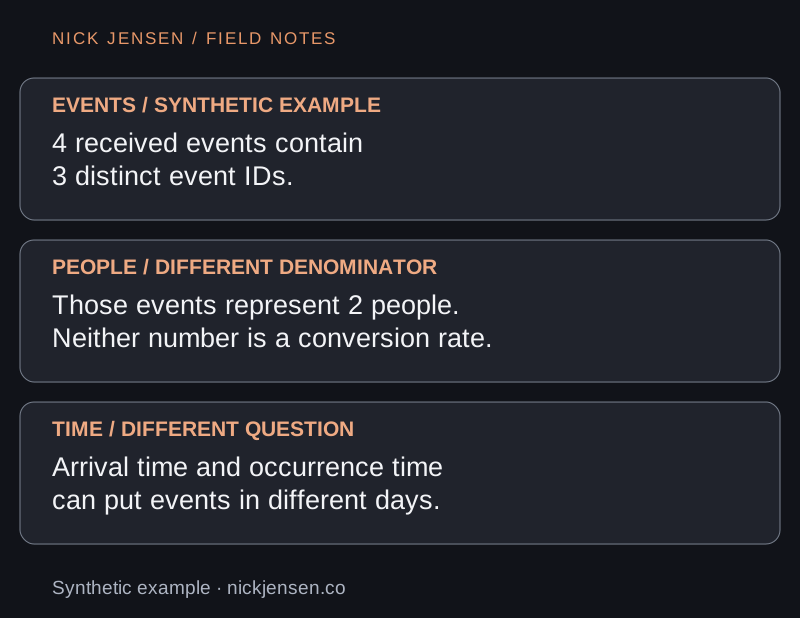
Synthetic event counts illustrate different metric definitions; these are not site analytics.
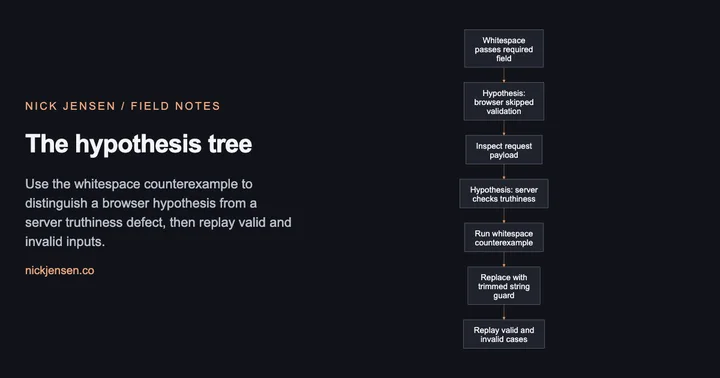
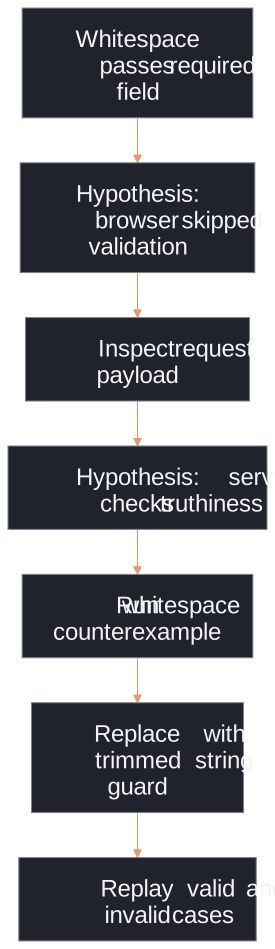
V35 / Illustrative framework
Use the whitespace counterexample to distinguish a browser hypothesis from a server truthiness defect, then replay valid and invalid inputs.
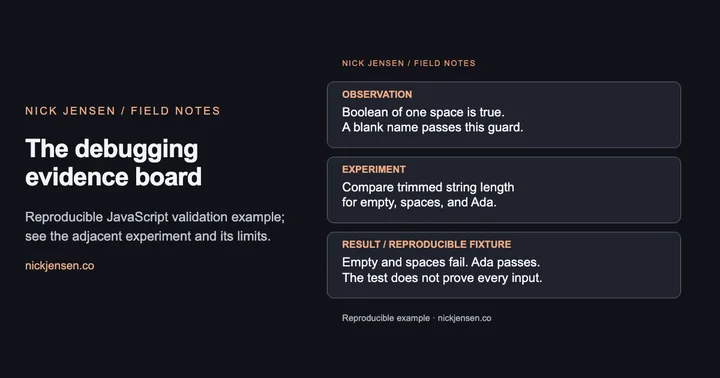
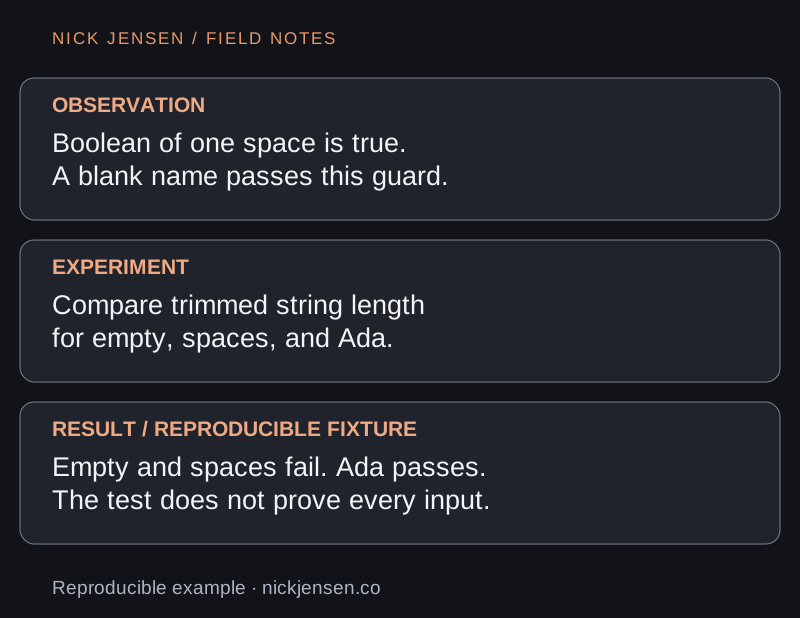
V36 / Reproducible example
Reproducible JavaScript validation example; see the adjacent experiment and its limits.
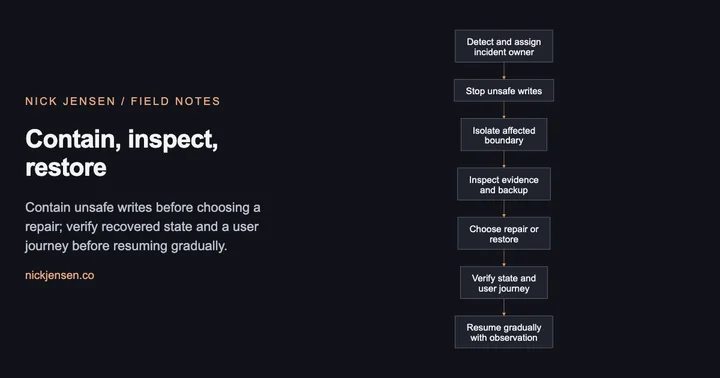
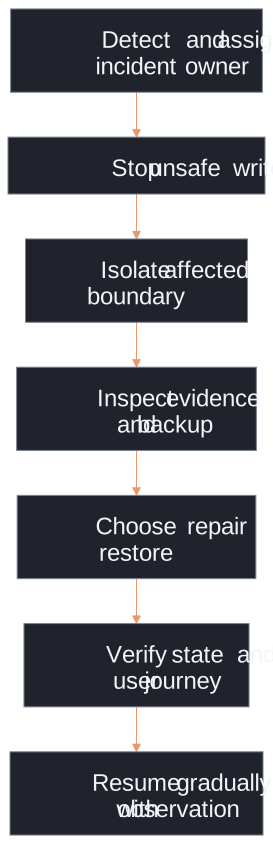
V37 / Illustrative framework
Contain unsafe writes before choosing a repair; verify recovered state and a user journey before resuming gradually.
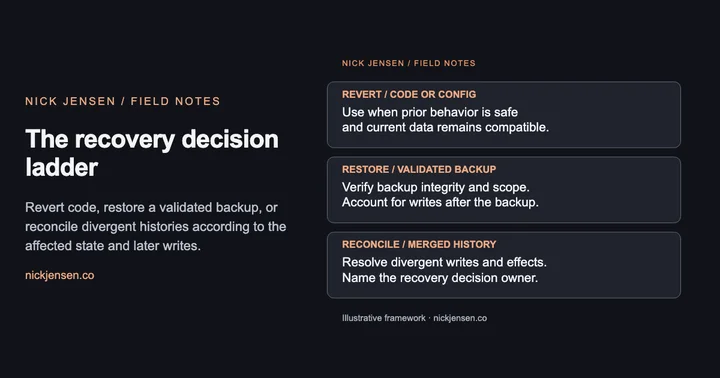
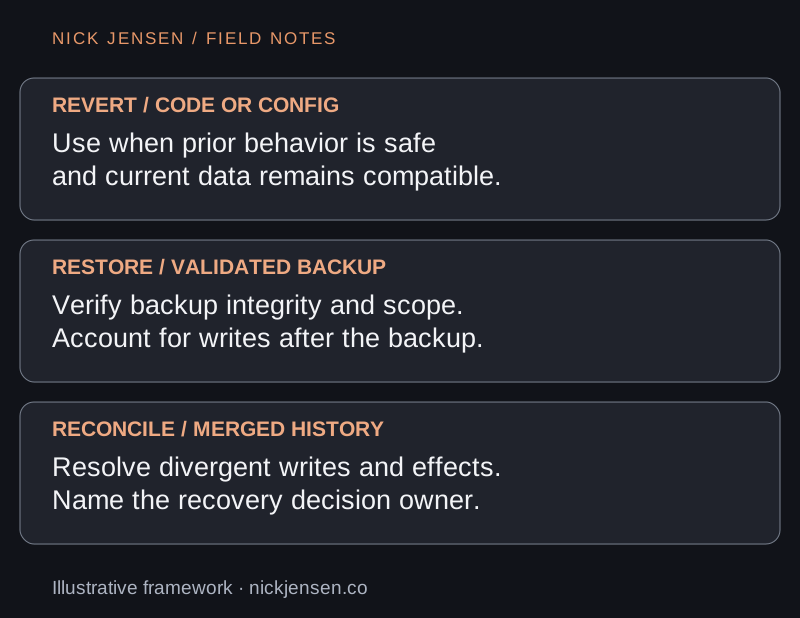
V38 / Illustrative framework
Revert code, restore a validated backup, or reconcile divergent histories according to the affected state and later writes.
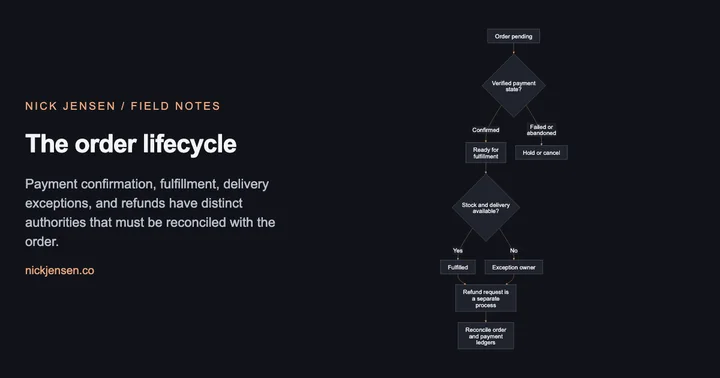
V39 / Illustrative framework
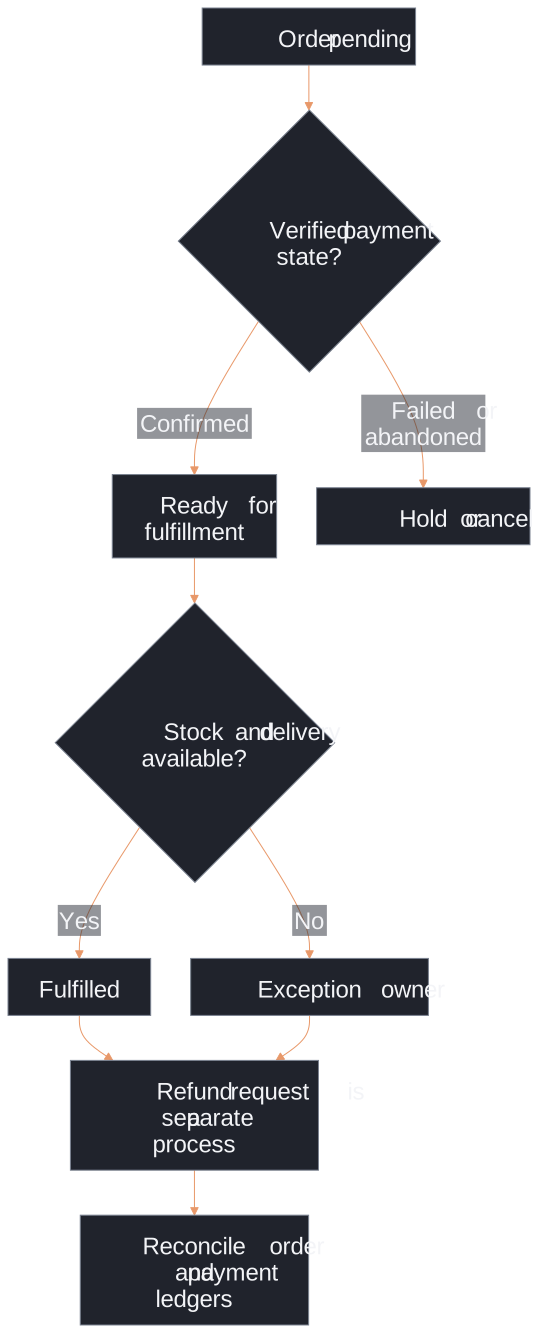
Payment confirmation, fulfillment, delivery exceptions, and refunds have distinct authorities that must be reconciled with the order.
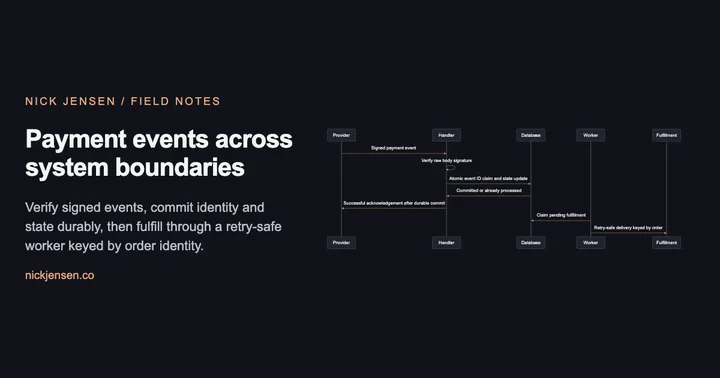
V40 / Illustrative framework
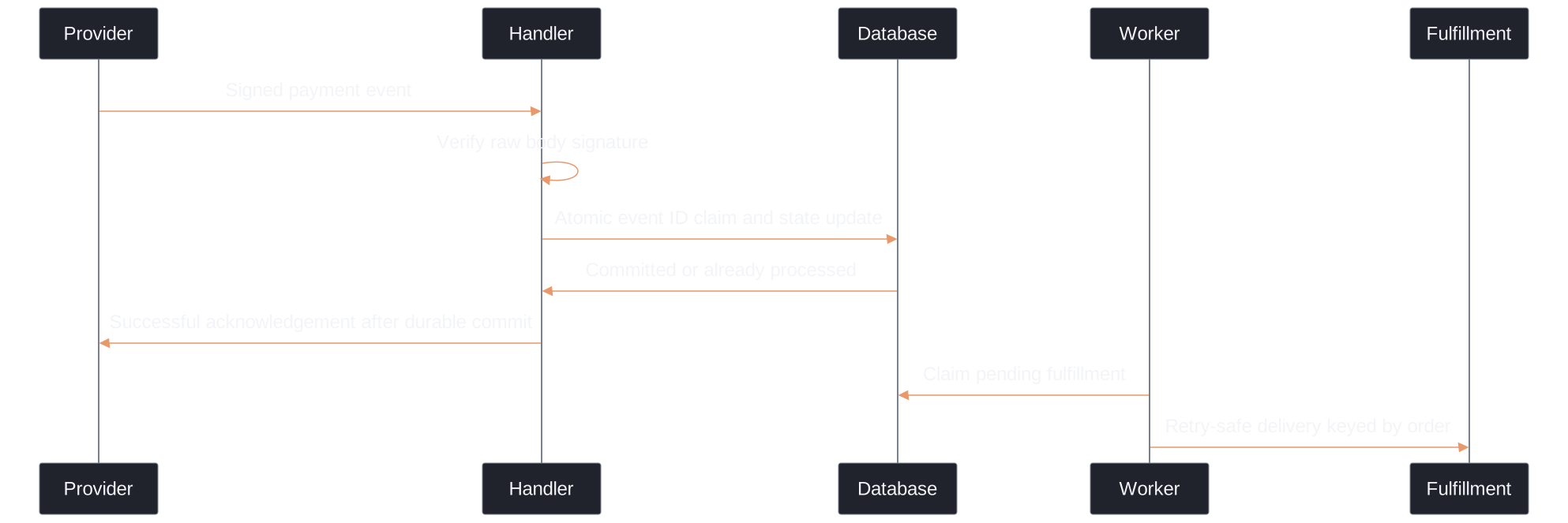
Verify signed events, commit identity and state durably, then fulfill through a retry-safe worker keyed by order identity.
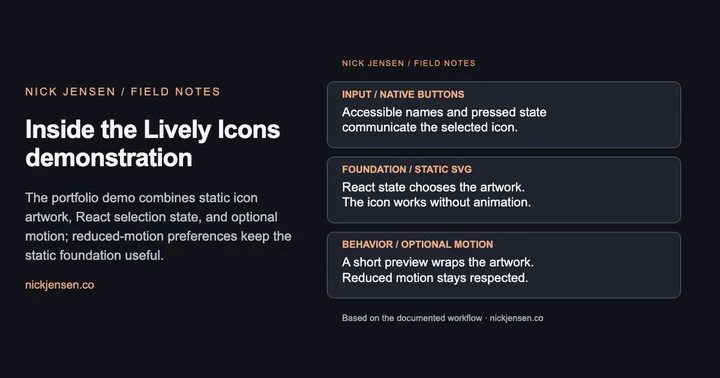
V51 / Based on the documented workflow
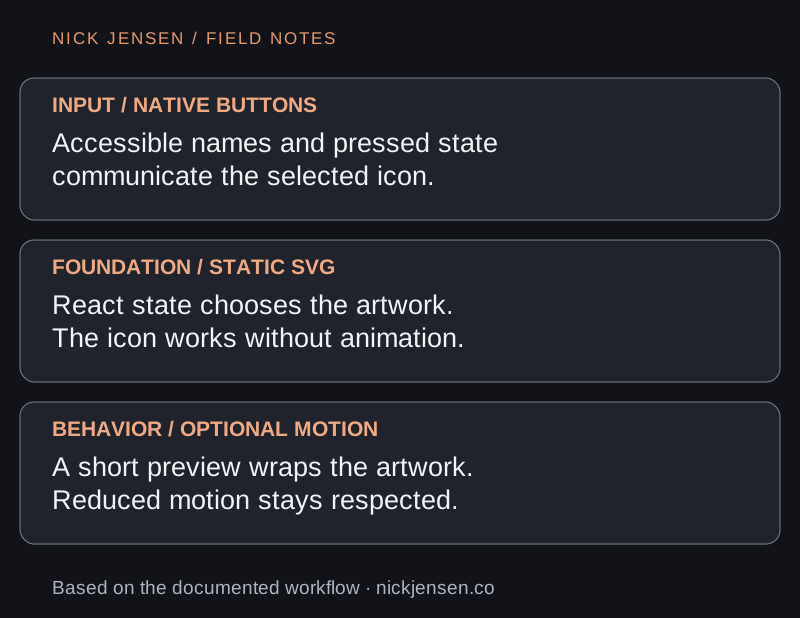
The portfolio demo combines static icon artwork, React selection state, and optional motion; reduced-motion preferences keep the static foundation useful.
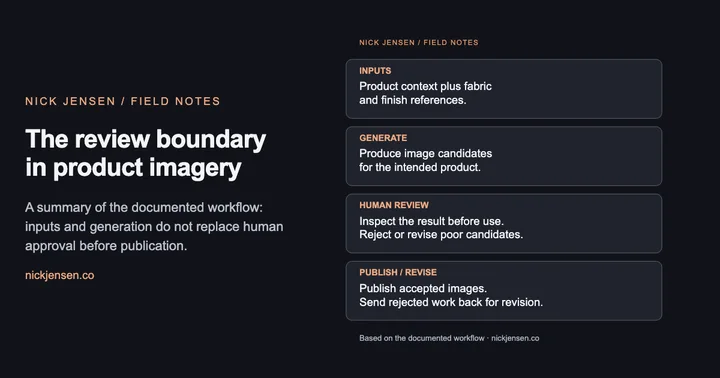
V52 / Based on the documented workflow
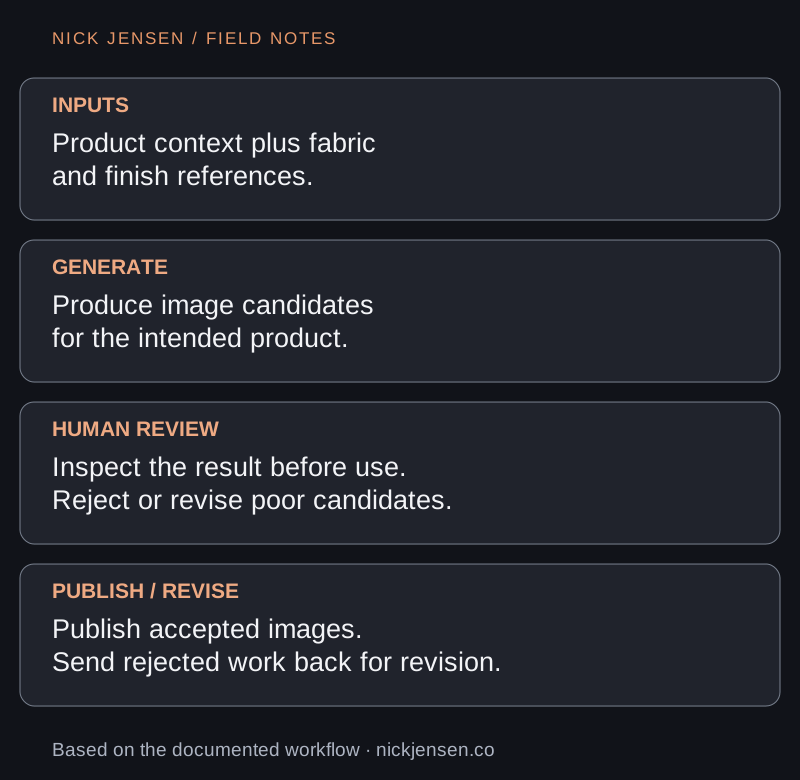
A summary of the documented workflow: inputs and generation do not replace human approval before publication.
A diagram starts the conversation. The useful part is connecting it to your system and its constraints.